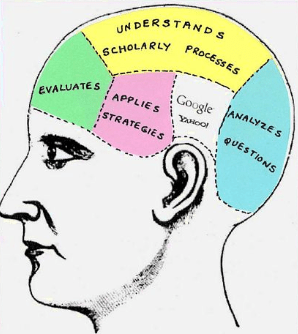
July’s last day, my blog’s first. For now, my goal is to use this blog as a medium to share my un-polished ideas and thoughts in order to facilitate more in-depth research and writing.
This year, I’ve continued to grow my appreciation for life. I am grateful for the opportunity to make a difference, be an inspiration, and leave a lasting legacy.
Some of the topics of research on the forefront of my mind lately have been:
Digital Ethics
Innovation in Impoverished Areas
Adventure and Travel
Addiction and Rehabilitation
Drone Ethics and Regulation
International Conflict
Refugee Challenges
Expect to see more of my research on the aforementioned topics on blogs and articles to come.
But for today, a random topic, Multimedia Literacy.
Defined: Media literacy is the ability to access, analyze, evaluate, and create media. Media literate youth and adults are better able to understand the complex messages we receive from television, radio, Internet, newspapers, magazines, books, billboards, video games, music, and all other forms of media.
Two main points:
- Technology allows for accelerated development of individuals’ perspectives, understandings.
- “Knowing things” has become outdated
“No way. Google it…”
Enter the scene of two friends, Mike and Larry on a road trip.
After driving by a hillside of sunflowers, Larry confidently remarks, “Did you know sunflowers always face the sun?”
Mike paused, thought about it, and laughed, “There’s no way man!”
The pair rallied speculation back and forth before Mike dropped the hammer.
“Nope. Google it. I promise you’re wrong.”
A minute later, Larry says, “Well… They do follow the sun, but only in their immature stage.”
“So once they bloom they don’t face the sun?” Mike replied.
“They face East once they bloom, apparently due to photoreceptors called phototropins. Scientists think they develop a preference for facing east while they are young because it gives them an advantage to be warm in the morning.” (https://www.nytimes.com/2016/08/05/science/how-sunflowers-follow-the-sun-day-after-day.html)
We’ve all had some form of the previous scene unravel. A disagreement followed by a moment of learning. Through a standard application of their mobile search engine, Mike and Larry uncovered the truth about sunflowers and how they function. They altered their previous perspectives to align with new information.
Although the Sunflower example might not be the most practical, or important, it highlights the simple way that using a search engine can accelerate the development of individuals’ perspectives and understandings. Prior to the Internet Era, Mike and Larry would have had a hard time settling their meaningless road trip dispute.
Less misconception = better decision making. For example, a misconception that someone has about how financial markets work might lead them to make an ill-advised investment, threatening their family’s financial security and well-being.
Technology and the proliferation of mobile devices provide tools for people to avoid misconceptions, accelerate their learning on-the-go, and ultimately use better information to make better decisions.
The integration of technology into our daily lives: “Knowing things” is becoming outdated. It is no longer necessary to memorize facts because the answer to almost any question is at a person’s fingertips, and accessible at any time.
 Kyle Huber