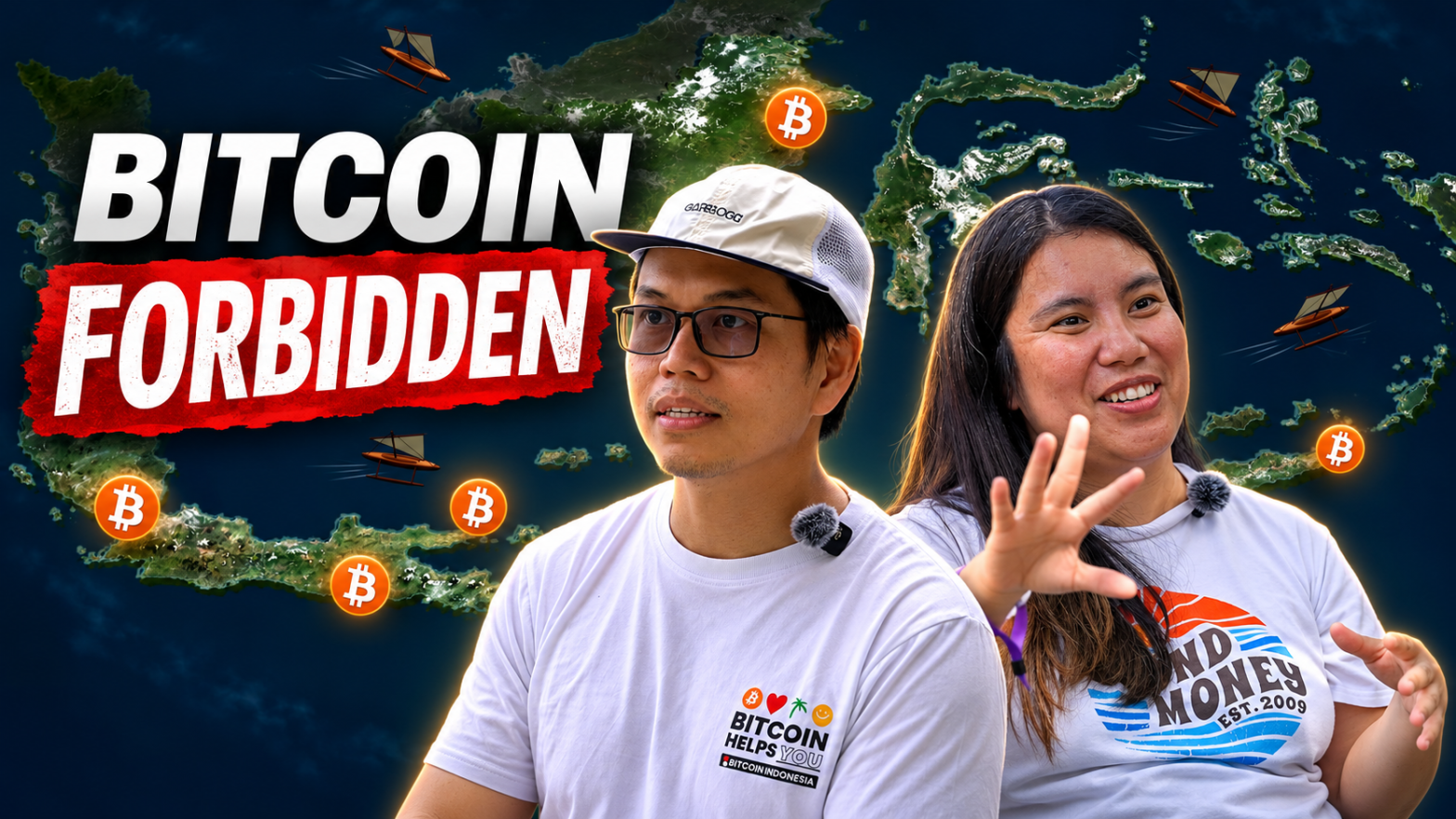
Indonesia is one of the most beautiful places on earth. Millions of tourists visit every year for the beaches, rainforests, culture, and unique way of life.
But behind the postcard-perfect scenery, there’s another story unfolding.
A grassroots movement of teachers, entrepreneurs, developers, and everyday people who are questioning the money they use and building an alternative.
And they’re doing it in a country where using Bitcoin payments are prohibited.
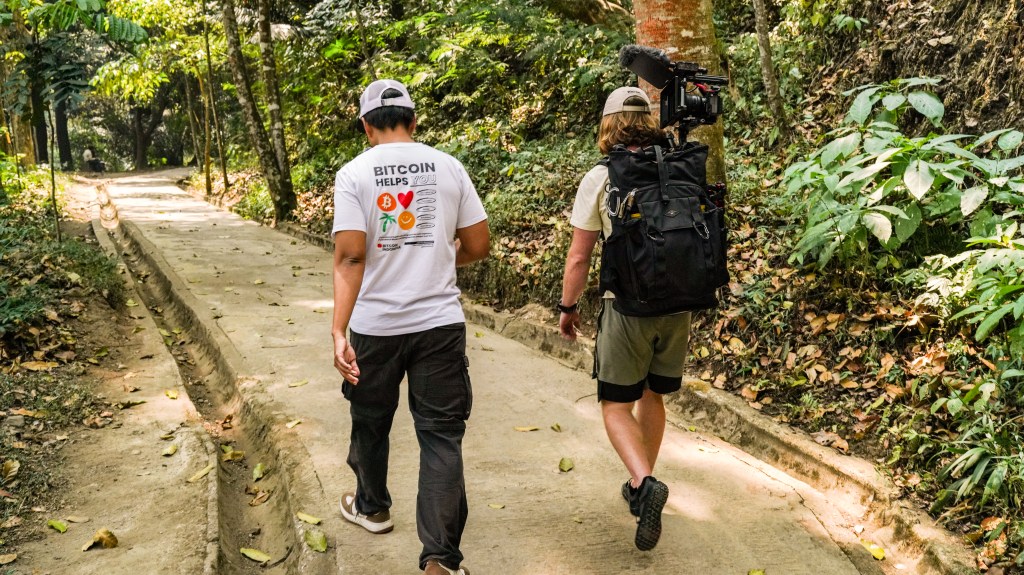
From Bitcoin Island to Bitcoin Ban
In the early days of Bitcoin, Bali was actually one of the world’s early adoption hotspots.
As far back as 2014, local businesses were accepting Bitcoin, weekly meetups were bringing people together, and the island even had a Bitcoin ATM.
Then the government cracked down.
Indonesia requires payments to be made in its national currency, the rupiah. Paying for goods and services with Bitcoin is prohibited, and violating currency regulations can carry serious penalties.
Almost overnight, the once-thriving Bitcoin economy in Bali went quiet.
But the movement didn’t disappear.
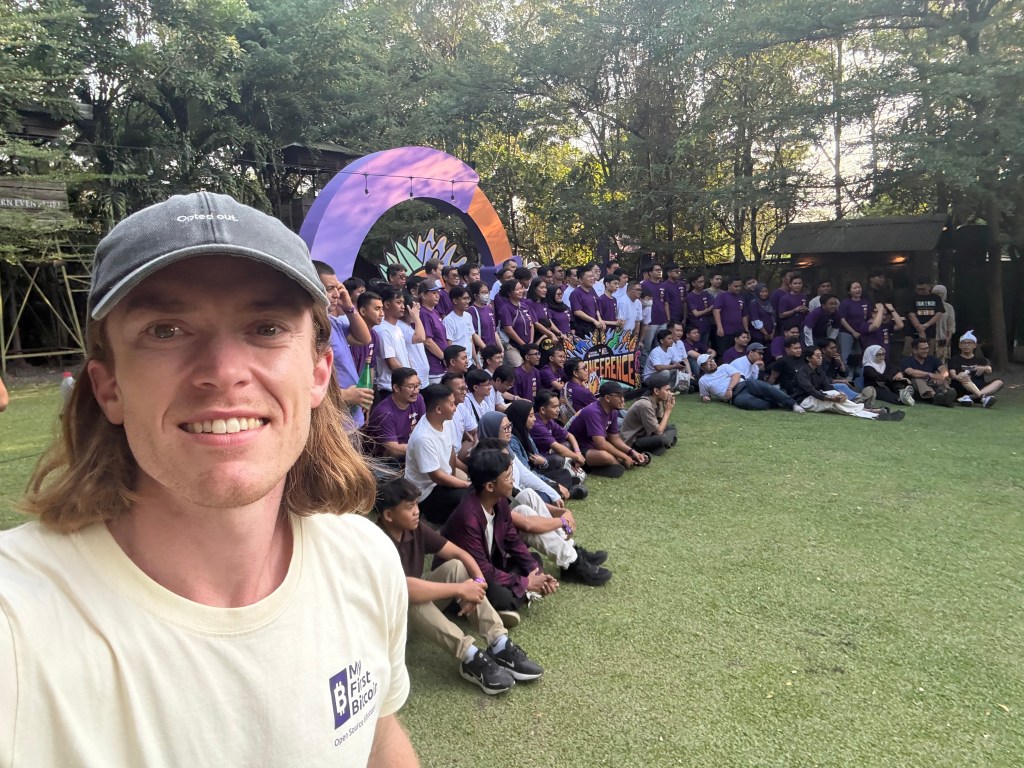
Today, Bitcoin communities have formed across the Indonesian archipelago, with as many as 40 meetup locations at their peak.
And what’s driving that growth isn’t speculation or the promise of getting rich.
It’s people trying to understand why the money they work so hard to earn keeps losing value.
What Happens When Saving No Longer Works?
One of the people featured in this documentary is an elementary school teacher who lost her savings through problems with the banking system.
She had worked hard, saved diligently, and tried to prepare for her family’s future.
And then the money was gone.
Her story stuck with me because it illustrates something we often take for granted.
We assume that if we work hard, live below our means, and save responsibly, we’ll eventually get ahead.
But what happens when the money itself doesn’t hold its value? Or when the institutions holding your savings fail you?
For millions of people, this isn’t a theoretical debate about monetary policy. It’s their everyday reality.
Another community leader asks a simple question: Why should someone who just wants to work and save have to become an investor to protect the value of their money?
That’s a question worth thinking about.
We’ve created a monetary system where simply preserving the purchasing power of your labor has become a full-time job.
Bitcoin offers an alternative.
But understanding that alternative requires education.
Education Is the Foundation of Adoption
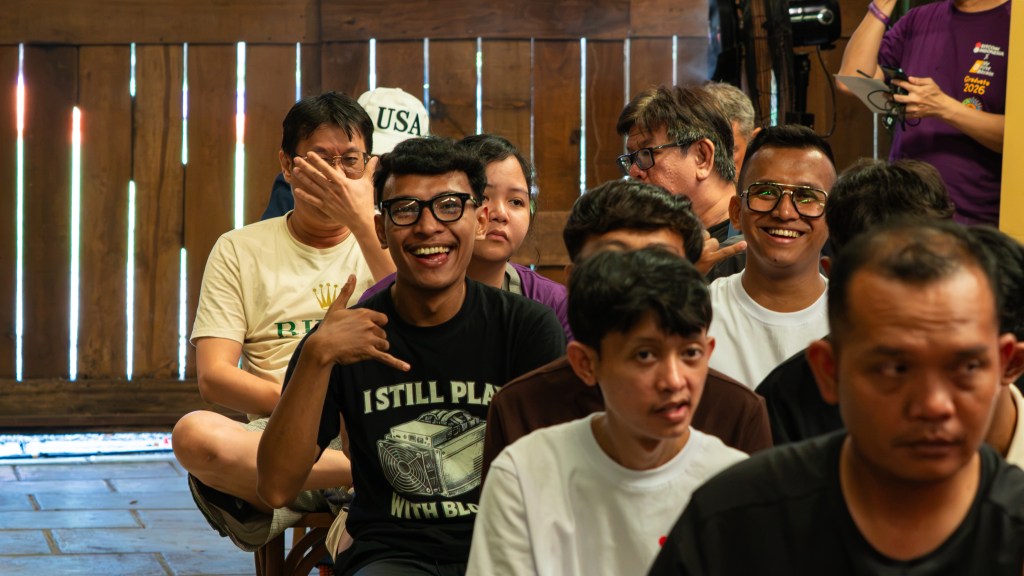
This is where the work of My First Bitcoin and the local Indonesian Bitcoin communities come together.
Rather than simply encouraging people to buy Bitcoin, they’re teaching people what money is, how it works, and why it matters.
One group even organized a meetup at Indonesia’s central bank museum, where participants explored the country’s monetary history, from gold and silver to colonial currencies and the modern rupiah.
Other communities are hosting workshops on self-custody, Bitcoin mining, and running nodes.
They’re helping people take responsibility for their own money.
And they’re doing it without waiting for permission.
What I find especially encouraging is that many of these community leaders aren’t wealthy investors or professional Bitcoin developers.
They’re ordinary people who learned something valuable and decided to share it with others.
That’s how grassroots adoption happens.
One person learns. They teach someone else. That person starts a meetup, opens a business, or helps a friend set up a wallet.
And slowly, a network begins to form.
Bitcoin Is More Than a Store of Value
One of the most powerful stories in the documentary comes from the devastating floods in Sumatra.
When communities were hit by disaster, a local Bitcoiner turned to the global network for help.
Using Bitcoin and Nostr, he raised donations from people around the world, converted the funds into local currency, purchased essential supplies, and publicly documented how the money was spent.
No international bank transfers. No lengthy approval process. No need to wait for a large institution to coordinate the response.
Just people helping people.
This is the part of Bitcoin adoption that I believe deserves far more attention.
We spend so much time talking about Bitcoin’s price, ETFs, institutional adoption, and what the next market cycle might bring.
But Bitcoin’s greatest potential isn’t simply creating another asset that people can accumulate.
It’s creating an open monetary network that anyone can participate in.
Bitcoin is a network where people can send value across borders, support one another, and build businesses without needing permission from a central authority.
Of course, there are still obstacles. In Indonesia, spending Bitcoin directly remains a legal challenge.
But that makes the work of these communities even more important.
They’re building the knowledge, relationships, and infrastructure that make future adoption possible.
We Are All Satoshi
After documenting Bitcoin communities across different parts of the world, I’ve noticed a recurring theme.
The strongest communities aren’t necessarily the ones with the most Bitcoin.
They’re the ones with people willing to do the work.
People who organize meetups, teach classes, onboard merchants, build tools, and show up consistently for their communities.
Bitcoin is a permissionless network, but that doesn’t mean adoption happens automatically.
Someone has to build it.
And in Indonesia, that’s exactly what people are doing.
Watch the documentary on YouTube, completely free:
Satoshi gave us an incredible gift. An open monetary network that anyone can use, build on, and contribute to.
But what we do with that gift is up to us.
The people in Indonesia are showing that you don’t need permission, a computer science degree, or a massive amount of capital to make a difference.
You just have to find a way to contribute.
This is part 2/4 of the My First Bitcoin documentary series, Bigger Than Bitcoin.
Next up, Medellin, Colombia!

