The Big Doozy

This week I set two simple goals: go hiking, and see the northern lights. I figured, even if clouds prevent viewing the northern lights, I’ll still be able to go hiking and get some sweet drone footage. With spotty weather in the forecast, I signed up for 24 hours on the train. The plan: Copenhagen to Malmo to Stockholm, then from Stockholm to Tromso, Norway, at a latitude of 69 degrees North.

Wednesday morning I arrived in Stockholm. I had one obligation, to conduct an interview for my film project at 10. It went quite smoothly(I am starting to get the hang of this Question-asking thing) and provided a valuable new perspective, through the lens of an attorney. With six hours to utilize before my night train North, I strolled the waterfront and visited the city hall gardens. The town had been blanketed in snow just two days earlier, leaving the sidewalks slick and icy. In the Afternoon, I took a bus out of town and essentially got lost in a forest when Google Maps failed me. The trails were not installed into the maps and my GPS was out-of-whack. Totally disoriented, I should have missed the train, but a local contractor, who barely spoke English, helped me find my way back.

Fast forward two days. The night train that should have ended in Narvik was cancelled and held up in Kiruna, about 3 hours away. Unfortunately, mother nature doesn’t always cooperate, and some things aren’t meant to be. As an apology, the train company provided a hotel room, lunch, and dinner. It turned out to be a sweet deal. During the two days in Kiruna, it dumped more than two feet of snow, with gusty winds and frigid temperatures. I failed to achieve both of the week’s goals; no hiking, no Northern lights. Instead, I spent the days reading, writing, relaxing in the sauna, and gobbling down all-you-can eat buffet. Ironically, Thursday night was Thanksgiving. I shared a wonderful Swedish meal of Salmon, Rein Deer, potatoes and veggies, with a kind, funny, Australian couple about 80 years-old. Bon’ appetite. The group that was headed for Narvik, about 8 or 10 of us, made the most out of the unfortunate circumstances.

Now, let me attempt to describe what occurred Friday evening. The whole ordeal was hectic, unfortunate, and embarrassing(but I’ll tell you anyways). The train back to Stockholm was set to depart at 6:25 PM. Earlier in the day I had looked up the location of the train station. Google Maps showed it was just a five minute walk. At about 6 o’clock, myself and a one other guy, a train conductor named Lukas, from Prague, left the hotel. We politely passed on the opportunity to taxi. Dragging my Osprey roller bag through inches of snow left two deep rivets along with my footsteps. 5 minutes passed, then 10. We circled the area where the train station was supposed to be. It didn’t take long to realize that we were nowhere near any buildings, and the roads on the maps did not match what we saw in front of us.

When we realized the train station was nowhere in sight, we turned around and trudged back uphill, about two hundred meters towards the street. I was carrying three bags: my backpacking pack, an osprey roller bag, and a re-usable grocery bag. Lukas led the way from the walking path to the street, forging through thigh deep snow. Without a shoulder or sidewalk, we drew cars’ attention immediately. The first two cars flashed their headlights and honked. Then a city worker in a pick-up truck approached and rolled down his window. Lukas bellowed a distinctive, “HELP!” I quickly added that we were lost and trying to find the train station. The Samaritan said, “Hop in.”

It turns out we were more than a kilometer from the station. Because the local iron mines could collapse underground, the Swedish Gov’t is funding a long-term project to re-located the entire city, three kilometers, house by house. The train station had moved in the last year, and Google Maps wasn’t up to date.

I sat in the back seat and Lukas rode shotgun. We barely had time to say thank-you by the time we arrived at the train station. Ecstatic, we hopped out of the truck. I grabbed my backpack and suitcase out of the truck bed and approached the train smiling. Familiar faces from the hotel laughed as we appeared, still covered in snow. No more than 15 seconds later, I froze. I had left the grocery bag in the truck’s rear seat. The contents included my rain jacket, kendama, camping stove, special camera/gimbal batteries, my dinner, and worst of all, my Eurail Pass.

My stomach dropped, heart sank, and ecstasy vanished. I swiveled around to glimpse the truck pulling out of the parking lot. It was too late to yell or run it down. Still wearing my backpack, I ran up the street the opposite direction towards the main road, speaking out loud to myself, “No, no, no, no, no”- over and over again. It was surreal, almost like an out-of-body experience. I waited a few minutes, to no avail, trying to think through my plan of action. Hustling back to the train, the clock was ticking: 6:22. The train would depart in three minutes. I needed to make a decision; if I stayed, the next train wouldn’t come for two days, I wouldn’t have a place to stay, and I likely wouldn’t recover the bag anyways. Standing outside in the snow alongside my Swedish friend Christian, and Lukas, I was mentally paralyzed. Fortunately, the train’s ticket checker, a kind middle-aged blonde lady, assured me that the missing Eurail pass would not be an issue(on this train at least). I boarded the train. Overwhelmed and out of breath, I dumped my bags in the cabin and began to think through what had just transpired.

Ironically, just one day prior, I had written a blog titled, 8 Tips for Traveling Europe. Number two on the list was “Budget Conservatively”: be prepared to lose things and replace broken gear. Standing in the aisle outside the cabins, Christian leveled me out, reminding me about the blog. He asked what advice I would give myself in this situation. When I am able to assess the situation through a 3rd-person point of view, it makes dealing with challenges much easier (this technique can probably be applied anytime).

Life goes on, and my adventure continues, albeit with a slight speed bump. I firmly believe humans learn more from our mistakes, misses, and failures than our successes and accomplishments. With the benefit of hindsight, my brutal mistake taught me:

  1. NEVER trust Google maps, or any sort of map for that matter. Find the location and confirm it with a human being, ideally a local resident.
  2. Don’t try to get cheeky and keep anything of value in your grocery bag. Valuables should be zipped away, even if that means accessing them less efficiently.
  3. Slow down, avoid rushing, and always double check your belongings
  4. Purchase ‘pass protection’ for your Eurail pass! 14 Euro and you are covered up to half the value of the pass, about four hundred dollars(I now need to purchase tickets out of pocket and keep receipts to be reimbursed). Usually I don’t splurge for insurance but when there’s this much on the line, it is the wise thing to do.

If I was the only person to make such a foolish mistake, I wouldn’t bother sharing my story with you today. But due to the absurd circumstances and hectic turn of events, I think you’ll understand how it all went down. When I explained my misfortune to the train attendant, she was anything but surprised. Apparently people leave all sorts of things on trains: cameras, entire suitcases, phones, and even themselves. “People don’t know anything” she said.

8 Tips for Traveling Europe

Gone are the days of Rick Steves’ travel advice monopoly, where you needed to buy a book to get quality, accurate information. Here are 8 of the most important pieces of advice I would give to someone wanting to travel in Europe.


1. Before you start looking at specific countries, begin with a general idea what you want to do.

Do you like shopping and partying? Backpacking in the mountains? Hanging out on the beach? Europe is unique because it has it all, in close vicinity. Taking this approach guarantees you will enjoy wherever your travels take you.


2. Plan your budget conservatively

Begin by calculating your expected costs: accommodations, transportation, food, activities, museums, clothing, etc. From there, account for public transport, extra city taxes on accommodations, lost or broken gear, possible health costs, and more. To make your budget more conservative, add 5-10%.


3. Transportation: fly, bus, or train?

I started writing this section, but then realized the discussion is complex, requires a deep dive article by itself. For now, all you need to know is: Rome2Rio.com. A friend showed me this website and it works better than any other tool out there, including Google.


4. Costs vary significantly across Europe

As a general rule of thumb, it’s safe to expect Western and Northern Europe will be more expensive than Eastern Europe, the Balkans, Greece, and even Italy. Depending on your itinerary, spending more time in places that cost less may extend the potential duration of your trip. Budapest, Prague, Vienna, Belgrade, Sarajevo: these are gorgeous cities with great restaurants serving food for a fraction of what you would find in the US, France, Germany, or Scandinavia. Hostels are cheaper too.


5. The “Time of Year” Factor

The high-season in Europe is the Summer. Traveling between October and January for example, means colder weather, but shorter lines, cheaper accommodations, and more available trains. It also means less cool people to meet. That being said, I’ve met good folks at every hostel I’ve stayed at. One of the best parts about traveling alone is the likelihood you will meet people sky-rockets. Open your mind, let down your barriers, and talk to someone who lives far away from you. The insights and stories you will hear are priceless.


6. Bring a Lock (or two)

Hostels usually have lockers for day storage, but often not enough locks left to borrow. When you share a room with 4-8 other people, leaving your personal belongings unattended all day poses a risk to the success of your trip! In places like Switzerland, theft is rare, but having a lock guarantees your items will remain safe while you explore the local attractions.


7. Ask a local about what to do and see

This might be obvious, but it is solid advice. If you try to plan the minute details of your trip on the internet, you will inevitably be sucked into tourist traps. Searching terms like “best things to do in…” does not mean you will find the best things to do- instead it will give you the list of businesses and tourist attractions which have paid Google the most money. Staying at hostels makes this advice easy to follow, as the employees are typically young, local folks, hoping to make your visit memorable.


8. Travel with a Purpose

Although this is #8 in my list, it is the most important advice I can offer you. Traveling provides opportunities to enjoy yourself, and IMPROVE yourself (see my blog, “Improve Yourself”). Set a few goals and use your time amidst new people, places, and cultures to grow and learn. Shaking up your routine allows you to break bad habits, and form new, healthier ones. When you return home, you will be rejuvenated, and often find yourself appreciating the little things even more.

Vienna: Trip Update 11

Night train in, night train out. Short and sweet video update from Vienna, Austria.

At this point I began to take discover how tired I really was. The sleep you get on a night train is nothing like a night in a bed, no matter how creaky.
After 3 night trains in 5 days, I decided to spend the weekend in Rome, then begin traveling North to France.

There was no shortage of sights to see in Vienna. I began the day by heading straight to the river for a walk, then hopped back on the tram to begin an afternoon of meandering the historical city center and plaza. All in all a day well spent!

One minor observation from Vienna was the beauty of the street art along the riverbanks and sidewalks. Watch the last 10 seconds of the video to see what I mean (or scroll up to the banner).

On we go to Rome, then Nice. Living the dream over here!

Vienna has to be one of the most spectacular cities I’ve been to.

Improve Yourself

Heads up! This discussion goes deep… quickly…


What is the purpose of life? Why are we here?


These are the abstract questions to which we all seek answers. It is the mystery which unites all people. Rich and poor, old and young, black or white, the question is urgent because the answer dictates how we should act; what should we do with our time, talents, and energy?


One common response is along the lines of “helping others” or “making the world a better place.” Giving feels good. When I think about the most noble, admirable members of my community, the first people who come to mind are those who put others’ needs above their own. One of my friends in college, Roland, would drop his pre-med studying (even though he had another 12 hours to do before he slept again) to help me edit an essay at a moment’s notice. The most influential mentors in my life will gladly spend their precious time, no matter how busy they are, to talk me through a challenge, or inspire me to think differently. In my professional experience, the most effective leaders share a few common traits: humility, compassion, and selflessness.


Other typical responses include: discover what you love to do, and do it. Plan for a comfortable retirement. Find spiritual peace. Be happy. Build a better life for your future generations. Travel the world. Buys nice cars, clothes, and jewelry. Live a life of pleasure. All of these are legitimate answers, and it’s not my job to judge another’s’ motivations. My only question: Is what you are doing fulfilling your aspirations according to your goals and values?


The truth is, the answer isn’t the same for everyone. Some people have been blessed with exceptional talent that others will never possess. Maybe the key is to do the best with what we are given. A professional athlete who uses his or her status as a platform to create impetus for positive change might be maximizing their potential while the Buddhist Monk quietly meditates, teaching the next generation of monks spiritual traditions which have been passed down for centuries. There is no level playing field. Bill Gates’ kids have a different standard for what “success” in life looks like than a first-generation Haitian immigrant. Achieving “success” in life differs significantly depending on the circumstances, relationships, and opportunities that are presented. It’s not about the hand you’re dealt, but how you play your cards.


Others point to hard science, the fact that we are nothing more than a series of mutations evolving from bacteria and fungus. Earth doesn’t need us to continue surviving, that’s for sure. From this perspective, at the end of the day, nothing matters. Recently I met someone who firmly held this belief. I asked him, “What gets you out of bed in the morning?” To me, without purpose there is no reason to do anything. His response left me unsatisfied. He said, “You need to make your own purpose.” Hm… Okay, so two things about that. First, he essentially contradicted his own argument by implying that purpose in life is necessary (although he was adamant that life has no purpose). Second, (I know it is a small distinction, but) purpose is something you find, not create. When you find it, you know, but if you try to build your own, it won’t last.


So what is the purpose for our existence? The jury is still out, and I don’t foresee the universal answer coming soon.


Now, let me propose one possible reason as to why we are here. No matter who you are, where you are from, and what your response is to the cliché question posed to begin this blog, one single aspiration should be universal: Improve yourself. If you have already established goals, formulated a plan of action, and begun your journey, then improving yourself is a given; a better you will achieve your goals and fulfill your ambitions more effectively. Conversely, if your answer is still “to be determined,” then improving yourself will prepare you for when that time comes.


When I began college I consciously set a goal to start lifting weights. At the time, I didn’t have a practical purpose for being strong. I wasn’t going to be a body builder, and I didn’t play sports competitively. In hindsight, what I was really searching for was a purpose. Strength training provided that purpose, and copious endorphins to go along with it. It wasn’t until months or years later that I realized lifting weights translated into an ability to push myself in other ways. I learned that will power is a muscle. It can be trained. It can grow. It can get worn out. Some people have stronger will power than others. Some people crumple under pressure while others thrive.


My Sophomore year I set out to establish a University Club. I wanted to explore my passion for health and fitness while developing leadership skills. Two years later, my efforts paid off: HFCND, The Health and Fitness Club of Notre Dame. My initial goal was to call it a success if one single student improved his or her physiological health. It wasn’t easy. Meetings, proposals, fundraisers, events, scheduling… At times, I questioned why I spent so much time trying to keep the club afloat. But then something happened which I will never forget. After a club meeting, a student approached me to say he had cut excessive sugar out of his diet, and noticed higher energy levels and improved cognitive performance. During that moment, it all clicked. I cannot describe the feeling of fulfillment when I realized that my(and my fellow officers’) efforts had a produced tangible results. By the end of the year, the club had grown from a mere 12 to more than 200 members. Without the prerequisite experience in the gym, hours of perusing the internet, and acquired interest in health and nutrition, it wouldn’t have been possible.


Everyone is different, and our goals should reflect that. Lifting weights is just one way to improve yourself. Building empathy, compassion, and understanding is another. George Washington Carver offers a perspective which necessitates personal improvement:


“How far you go in life depends on your being tender with the young, compassionate with the aged, sympathetic with the striving, and tolerant with the weak and strong, because some day in your life, you will have been all three of these.”


Call to action: Improve Yourself. Don’t worry about shooting for the moon, just make incremental changes. Without taking the first step onto the trail you will never summit the mountain.


Germany: Trip Update 8


Eurail pass in hand, I departed Copenhagen for Hamburg.


Before this trip I was a novice train station navigator, and now I think I could do it for a living. Who needs a career when you’re a professional foreign language sign decipher-er?


Maintaining the ‘plan-as-I-go’ motto, I got a tip from a local German who told me where to find a hostel in Hamburg and what to do for the night. I arrived to an extremely warm welcome from two Polish guys. We waited half an hour for the receptionist to get back from dinner to check us in. Guess that’s what you get when you pick the cheapest hostel in town!


Night two in Berlin I met two more nice people and had some insightful conversation. One of the most important parts about traveling (especially solo) is keeping an open mind to new perspectives, cultures, and ideas.


The second day in Berlin, I met with two people from a non-profit organization for a brief off-the-record interview. The insights I gained have set me up for the next planned meetings in Paris and Calais.


Check out my newest blog, “Improve Yourself.”

Copenhagen: Trip Update 7


After the first 3 weeks of my Euro trip, Copenhagen gave me a chance to settle down, get some rest and gear back up for a month on the rails.

Shout to my buddy Derek for hosting me and to all the Hvidovre basketball players and club members, as well as host families we stayed with.

At this point I’ve visited Italy, Croatia, Greece, Switzerland, and Denmark.

One of the best parts about my experience has been the exposure to new cultures, languages, and people. It’s great to experience such distinct cultures, all packed into the smallest continent on Earth.

Next update, coming from Germany!

A Quick Story from Greece

After finishing a delicious meal at our favorite restaurant in Perissa, Santorini, I felt compelled to ask the two musicians if I could take some video of their performance. They were cordial, welcoming us as we sat down and chatting with us between songs. Without hesitation they both agreed, but then one of them said something I won’t ever forget. “Yeah man, but you’ve got to live your own life first.” It caught me a bit off-guard, and I quickly blurted out my standard, generic response, “Well I like to inspire others to get out and experience life.” He pushed back on that point, rightfully so, and the conversation moved on. I mentioned that by complete chance we stayed at their hotel, and had also met a Santorini local, Vladimir who was kind enough to show us around the island. He laughed and said, “nothing is just by chance.” A third woman joined in, adding, “this rendezvous was planned long ago.” The musician(I never got his name and he will never know the importance of our interaction that night) proclaimed, “the planners are planning.”

Two weeks later and I am still thinking about that conversation. Why record something? Surely, there is value in preserving a memory through photography, inspiring others, causing change through visual storytelling, etc. But which moments should be documented and which ones should remain un-hackable, un-shareable, and in one private location, the brain?

Where is the balance? For most people, it’s probably somewhere between recording absolutely everything and breaking their phone and camera and disappearing off the grid indefinitely(don’t worry I won’t choose either of these options).

While some argue that technology inhibits human interaction, I could make the point that without the original intent to just film some sweet Greek music I never would have had a real conversation that I am still thinking about weeks later.

My camera has already taken me places I never would have guessed, spurred conversations I never expected, and inspired ideas that would otherwise lie dormant.

At this point, I don’t have the answers to these questions. It’s just something I’ve been thinking about.

Switzerland: Trip Update 6

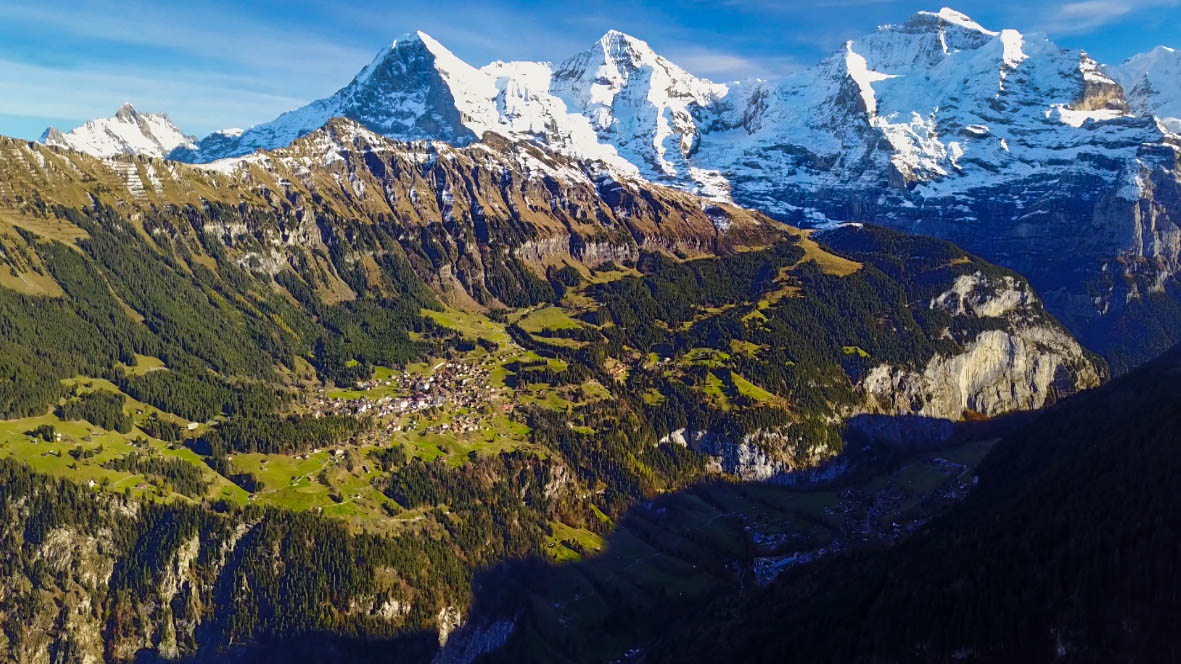
Interlaken, Switzerland: a town 3.5 hours outside Geneva, situated between Alps mountain peaks. It was the first time I’ve literally gotten butterflies in my stomach because of the sheer natural beauty.

Although our stay was short, we took full advantage, sunrise to sundown. The development of gondolas and public transit by train and bus make the mountains accessible even without a vehicle (a foreign concept in the US).

I can’t thank our generous hosts Flavia and Yens enough for taking us into the mountains and making a splendid Swiss Breakfast.