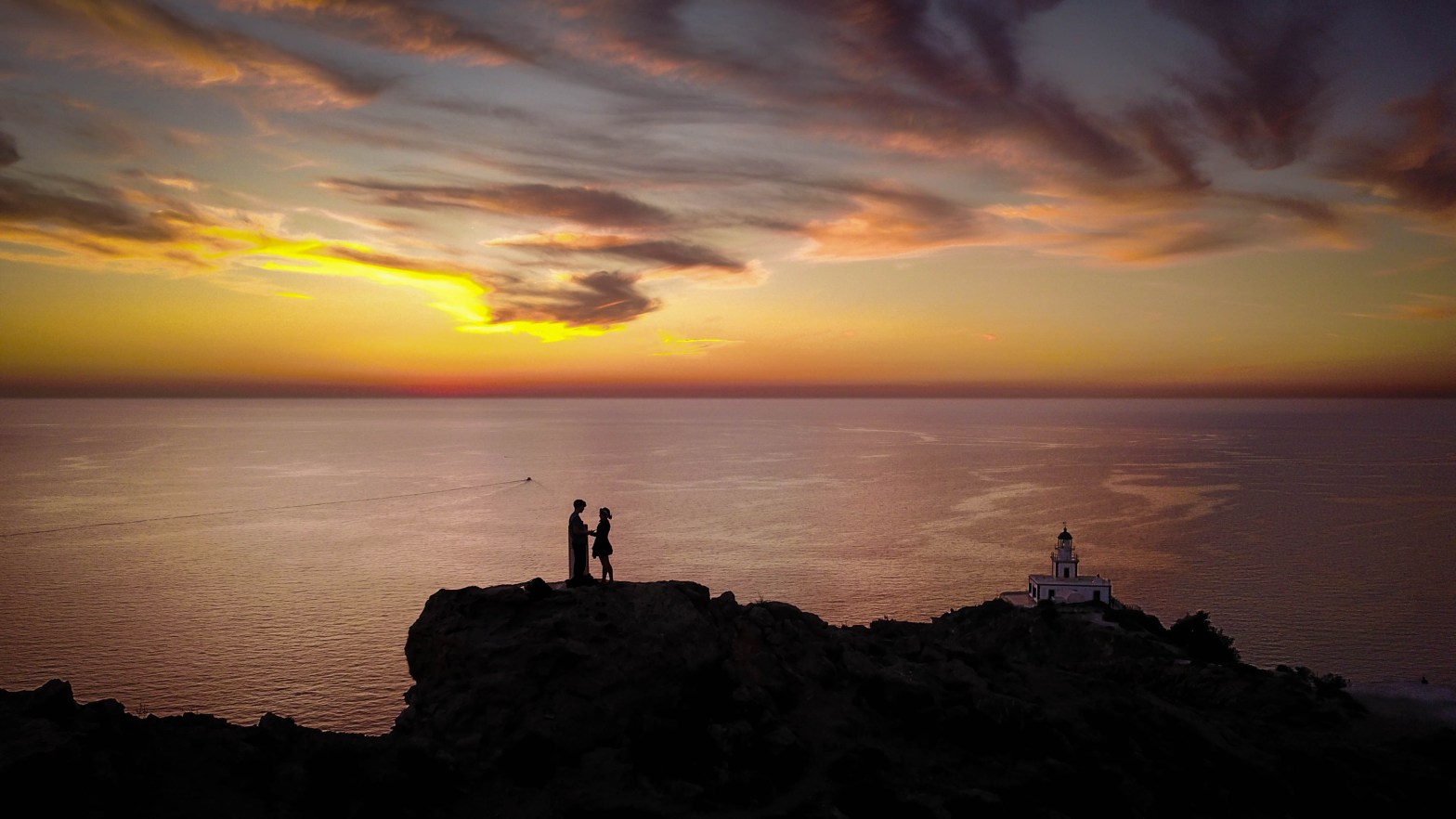
After a quick stint in Croatia the adventure moved to Santorini, Greece. An island designed for tourists and honeymooners, Santorini boasts about its spectacular sunsets, variety of beaches, and gnarly-looking cliffs.
What was once an active volcano is now a circle of islands, containing the caldera where sailors find safety from intense wind and waves.
Enjoy the video and feel free to comment or subscribe to my YouTube channel.
What a week! From Rome to Ancona, Ancona to Split, Split to Skradin, Skradin to Dubrovnik, Dubrovnik to Santorini, and Santorini to Athens, our week was memorable and exhilarating. We met some awesome people in Santorini, explored the stunning Krka National Park, and visited historical sights like the Acropolis, Pantheon, and ancient Diacletian and Venetian ruins.
Check out the video from Croatia. Greece coming next!
Currently in Rome, my trip continues tomorrow morning to Switzerland!
I can’t put into words the amount of learning, living, and loving that has taken place this past week.
At some point I’ll have time to sit down and write something with more substance- but for now just enjoy the video! I’m excited to move forward with my refugee and migrant film project next week.
It was great to catch up with my Midwest buddies. They’ve got some super rad new living arrangements in the city. Fortunately it was a gorgeous October weekend, albeit a windy one… (my drone could barely fly at times)
I am currently in Rome kicking the jet lag before going to Croatia tomorrow.
Welcome to KhubCreative.com, home of my blog and personal website.
For the remainder of the year I will be traveling in Europe; the countries to on my shortlist include Italy, Croatia, Greece, Switzerland, Denmark, Norway, Sweden, Spain, France, and the Netherlands.
My journey serves a few purposes. First, I’ll be spending a week traveling with my girlfriend in Croatia, Italy and Greece. From there, I fly to Switzerland to meet up with two buddies, one of which I haven’t seen in years. Secondly, I have an opportunity to establish myself as a driven, passionate, and talented independent film-maker. Finally, I want to come back home with some amount of proficiency with the kendama (traveling means lots of downtime waiting for trains, buses, and flights).
The issue I’ve chosen to tackle revolves around the refugee crisis.
Fleeing refugees, especially from war-torn, violence-stricken areas like Syria, Tanzania, Afghanistan, Mexico, and South Sudan, present a challenge for neighboring countries because of their sheer numbers. What are the main factors impacting the resulting trends? Who are the key stakeholders, decision-makers, and actors? What options are currently on the table and who is discussing them? How have states dealt with refugees in the past? What has been successful, unsuccessful, and what hasn’t been tried yet?
Now, my first trip update.
Destination 1: San Francisco. An Uber driver described San Fran as a hybrid between LA and Seattle. I’d agree. The Bay Area and the Puget Sound give the cities a similar feel. Walking through Fisherman’s wharf is However, unlike Seattle, the vast public parks provide endless opportunities to explore (fun fact: Golden Gate park is bigger than Central Park).
Check out the video update I’ve put together from the trip’s first three days below. Subscribe on YouTube and follow my blog here for the next update, Chicago.
Keep in mind I am limited on my under-powered, 5-year-old laptop… Waiting for videos to render and time lapses to export is apparently my new past time- and the reason I am writing this blog right now. ‘Till next time!
“So how long does it take you to get to the office?” I heard myself ask. Then I stopped in horror. – Tim Boomer, NYT
The End Of Small Talk, by Tim Boomer, tells a personal story from an experience in Costa Rica. He and his friends pick up an American, middle-aged hitch-hiker, on two conditions: 1. She must sing them a song and 2. She must tell them a story.
No spoilers! Ultimately, the decision to hear a complete stranger’s story ends up revealing a remarkable saga.
The Article addresses the dating realm, where small-talk and awkwardness find home, but its lessons are applicable across all relationships.
After listening to the podcast, I felt compelled to write a blog reflection because I struggle with similar questions myself. How do you broach a touchy subject with a friend? How do you know when to offer someone the chance to open up emotionally? As a leader, how can you motivate someone who is dealing with real problems of their own? In the professional realm, how do you build an environment that is conducive to honestly and openness?
The short answer is, I don’t know. But Tim Boomer might offer one solution: End the Small Talk. He says, “All it takes is a willingness to dive into conversations that may make us uncomfortable or that many believe to be inappropriate…” Rather than the generic “How are you?”, prod deeper, be empathetic. One of the most valuable lessons I’ve learned in my experience as a business student is the power of an inquisitive mindset. Showing genuine interest goes a long way in a world where authenticity is scarce.
One of the biggest advantages, and biggest faults of modern technology is the constant connection to others. From the telegraph and telephone to Instagram and Snapchat, the way people communicate has transformed societal values.
There are a multitude of ways modern technology supports safety, efficiency, and productivity. One positive outcome is that information spreads rapidly. During Hurricane Irma, government agencies successfully used Facebook and Twitter to share emergency messages and aid the safe evacuation of Florida (Source). Second, any individual person can share a video, picture, or message, from almost anywhere in the world. Human rights violations that may have gone unnoticed in previous decades are now more likely to be picked up by news sources(Example). Modern innovations like Skype allow doctors to provide medical care to rural areas around the globe. In the near future, augmented reality technology will allow an untrained person to perform basic procedures in emergency situations.
Unfortunately, advancement comes with consequences. First, college students today show less empathy toward others compared with college students in decades before. With different demands at work— hours answering and writing e-mail—people have less time to care about others.—USA Today, 2010 (Source). Without conscious effort, relationships are at risk of becoming solely virtual, trading likes and comments instead of truth and compassion. Further, compared to Baby Boomers (born 1946 –1961) at the same age, GenX’ers (born 1962–1981) and Millennials (born after 1982) considered goals related to extrinsic values (money, image, fame) more important and those related to intrinsic values (self-acceptance, affiliation, community) less important. Social media plays a role in determining what people value; if your social network tends to think, act, dress, eat, and live certain ways, chances are you will too.
Interestingly, college students today ranked “true companionship” a more important value than students did in the 1970s. On the surface, it might seem that students in the 1970s were simply not as good friends as they are today- but I don’t think anyone would buy that. Could it be that the term “friendship” has become too broad and ‘true companionship’ is in high demand? If you have a few thousand Facebook “friends”, five hundred or more LinkedIn connections, and a your entire phone’s memory is devoted to your contact list, is it possible to maintain meaningful relationships with all those people?
The narcissist in me says, No, of course not. Life is hectic; it’s hard enough to keep up with close friends and family, how could it be possible to appreciate the thousands of people who have impacted my life in some way?… And maybe it’s not. It’s possible that there simply isn’t enough time to sufficiently thank all of my supportive teachers, coaches, friends, mentors, professors, and co-workers. But here is my take: the best way to do right by those who love and support us is to take advantage of our lives, be humble, and work hard. Social media provides the space to share our endeavors.
Whether modern technology’s impact on society has been positive or negative, one thing is certain: its effects span the entire spectrum of human life. The more time we spend in front of screens, the less time there is for face-to-face interaction, self-reflection, and silence. The future brings the prospect of authentic-feeling face-to-face interactions through a VR headset. Eventually, when there is no way to distinguish real life from virtual reality, there will be no reason to get in your car and drive to work every day. Why visit family in Alaska when they “come over” for dinner every Wednesday night? With such rapid innovation, people risk losing their ability to effectively communicate face-to-face.
All in all, the biggest takeaway I had from the NYT article is to avoid meaningless ‘Small Talk’ and be mindful of the importance of face-to-face communication.
As a thinker, creator, and writer, I constantly ponder the oddities of the universe.
In this post, I’ll touch on the idea that “Less Is More” and why this concept is a tool to engage the present moment more effectively.
Imagine the feeling of discovering a delightful new experience; a beautiful place, tasty dish, or exhilarating activity. Whatever it may be, consider the sense of awe which comes from focusing 100% of your attention on the current moment.
As a child, finding awe is easy. Everything seems new, because it is. But, as we grow up, expectations begin to align with observations more often. After first visiting Disneyland, life seems complete, heaven realized. Now, you’d rather go to Vegas for the weekend. That park which once represented the chance to explore undiscovered territory, is now just a glance out the window on the morning commute. The satisfaction of mastering a new academic concept, musical instrument, or sport, doesn’t come around as often. The simple gratification of advancing from one grade level to the next is replaced by the pressure to work hard for promotion. Horror movies don’t scare you like they used to. Somehow, simple pleasures in life are overlooked.
This is where the idea that ‘Less is More’ comes in. Order a root beer next time you go to dinner. When you take the first sip, note the explosion of taste, the crisp, frosty glass, and the shiver of pleasure afterwards. Take another sip. The drink still tastes great, but that special, first-sip punch is missing. Finish the drink and order another one. Then a third. If you somehow experience the same amount of satisfaction across all three of your Root Beers, give me a call and I will reimburse you for the trouble. In economics, the concept at play is called “diminishing marginal utility.” Essentially, diminishing marginal utility means that as you continue to consume a given input, the output(in utils) decreases.
Diminishing Marginal Utility Curve
Keep drinking those root beers (or eating Pizza slices) and soon the joy you receive begins to decrease. By your 5th or 6th, you will get the point: ‘Less is More’.
In many cases, more is better (until consumption becomes excessive). Drinking more water is better than less. Working out more is healthier than working out less. Studying more is better than studying less. Spending more time with your friends and family is better than spending less. Drinking more beers is better than drinking less… well, maybe not. The point is, how much of something we consume dictates how much utility we derive from said consumption.
Now, let’s find a few examples where ‘Less Is More.’
Drinking less soda means you get more out of each soda you drink. Going out to dinner less often makes each dinner outing more special. Consuming alcohol less frequently makes each time you drink more enjoyable. Spending less time with your family and friends means the time you do spend with them is more meaningful. Posting less on social media means each post determines more about how your peers perceive you. Sleeping in less commonly makes just an extra hour a treat. Lowering your expectations means you will get more out of the moment.
Several famous authors and historical figures have used a variation of the phrase, “If I had more time, I would have written a shorter letter.” Packing powerful rhetoric into short messages requires additional effort and ability.
However, the elephant in the room: the power of habit. One American, Jebidiah, realized that, “Routine is the enemy of time. It makes it fly by.” Jebidiah decided to quit his job and spend a year riding his bike from Oregon to the tip of South America. Although his example is radical, he makes a rational point: falling into habits and daily routines reduces our ability to be awed, get inspired, and find passion.
Spouting Horn, Kauai, HI
The difference between someone who complains about minute details and someone who lives it up rain or shine, is purely psychological. There is no reason why one person should enjoy the same experience more than the person sitting next to them, but sometimes, that’s how it goes. I saw this phenomenon play out on a whale-watching tour in Kauai. Picture twelve tourists, a local or two, and the boat’s captain, all crammed into a 24-foot rubber dingy. At first, everyone was excited; we were about to see whales! But, then an hour passed, then two. No sign of whales. No reading on the ultrasonic listening device. The Captain had dealt with this challenge before; we cruised up the East coast of the Island, viewing gorgeous volcanic rock formations, isolated beaches and towering mountains. While several passengers began to murmur and sulk, I took it all in. The warm evening breeze, the sky’s changing colors, and the history of the Island astounded me. As the tour waned, the prospect of spotting whales seemed unlikely. On our way back to the docks, another tour boat captain came on the radio with the location of three whales. Our Captain threw it in full-throttle, and suddenly the negativity from the sulking tourists was gone.
Whale Watching-South Side of Kauai
How can anyone expect a positive outcome with a negative attitude?
“Less is More” is one factor in the situation above. The tourists who were more experienced travelers, taking longer vacations ironically were the same ones who pouted and complained the most. While they sulked, I loved every moment. Sitting side by side, we experienced drastically different tours, but paid the same price. Ultimately, the passengers satisfied by less, got more out of the tour. It’s not about the cards were dealt, but rather how we play the cards.
After visiting NYC and Pennsylvania I came home to celebrate my 23rd B-day. Two days later, the Enchantments trip began. The trip lasted five days; living moment to moment exploring, fishing, and filming was refreshing. The mountains made me hungry to get home and work, so that’s what I did. I spent the entirety of last week in post-production. I learned a brand new software and created a compelling storyline for the film.
A few major takeaways:
Cinematography is important, but the story is what really matters
Soliciting brief interviews on-the-go can be tough, even with your own friends
Having a notepad was helpful- to think creatively, jot down notes
Music is key. I spent a lot of time and effort choosing the music, and I think it paid off. I have a hard time naturally knowing when a track is right for the footage, but it’s something I’m working on.
Know your audience. My teachers and professors preached this to me since day 1. Catering the message, mood, theme, and story to the audience is crucial. People have different tastes, perspectives, likenesses, etc. Finding the ethos for the film is everything.
Post Production challenges:
Computer speed and rendering errors
Short time frame before BPL submission
Brand new software- Adobe Premiere Pro
Voice-over and interviewing myself
Cutting myself out of the background of a clip
Color correcting
Audio is probably the biggest challenge I have. I just need some more trial and error and I need a recorder that actually works. Maybe a new mic on the camera too.
I am planning to write blog posts more consistently. Travel is on the horizon as well, which will make for some new sights, smells, and experiences. If you haven’t already, please subscribe to my YouTube channel!
After winning the lottery for camping in the Enchantment Lakes’ Core Zone, six guys, long-time friends beginning their careers, embark on the five day backpacking adventure of a lifetime.
Trip Date: 8/20/17-8/25/17
Location: Enchantment Lakes, Alpine Lakes Wilderness, Washington, USA
Credits
The Squad:
Kyle
Charlie (aka “C”)
Edan
Sean
Matt
Video:
iPhone Snapchats:
Justin, Edan
GoPro:
Edan, Charlie, Kyle
Photography:
Derek Rowley, LE Night shot at Lake (day 4)
Matthew Orehek
Scrambling Prusik (day 3)
Fingertip Grip on Boulder (day 3)
Sean with Open Arms (intro)
Grip:
Charlie
Transportation:
Sean, Justin
Trip preparation manager:
Matthew Orehek
Why no map? The reason is intentional; it’s not about where we went, it’s about where you are going next.
Thank you for taking the time to watch my film. It’s a pleasure to hear positive feedback, so please don’t hesitate to comment below.



 Kyle Huber