7 Reasons Why You’re Not Too Late to Bitcoin

The Logic Behind “I’m Too Late to Bitcoin”

It makes sense why someone who hasn’t researched Bitcoin would assume that they are too late to the game. Bitcoin’s first known transaction took place on May 22nd, 2010, when Laszlo Hanyecz, a programmer, offered 10,000 Bitcoins (approximately $41 at the time) to anyone who could obtain two large Papa John’s pizzas and deliver them to his doorstep. Laszlo established Bitcoin’s first price, less than half a cent. Since then, Bitcoin has faced relentless attacks from nation states, banks, sophisticated hackers, and subject to endless slander from the media… all while growing to a market cap of $1.5 trillion.

From $0.0041 to $65,000 is a 15-million bagger. Due to the law of large numbers, you’re not likely to see another 15,000,000x return without severe hyperinflation; but the question at hand is not whether you’re too late to get insanely rich off a tiny investment in a short period of time. The question is, are you too late to dramatically improve your and your loved ones’ lives with Bitcoin? The answer is unequivocally, NO.

Disclaimer: Bitcoin is a disruptive technology laying the foundation for an entirely new economic system. It should be noted, as Jeff Booth, author of The Price of Tomorrow says, “anything that attempts to value the new system in terms of the old system is fundamentally flawed.” Thinking about Bitcoin in terms of dollars has a number of pitfalls, including that it makes Bitcoin seem volatile. In reality, 1 BTC = 1 BTC. Nonetheless, number-go-up does more marketing for Bitcoin than anything else, which is why it’s useful to this discussion. This is evidenced by the following chart of retail adoption vs. price. As price rises, new buyers enter the market. When price falls, they exit.

Bitcoin has seen multiple 75%+ corrections, including a 35% correction this year. Without strong conviction around Bitcoin’s long-term value, these draw-downs tend to shake Bitcoin holders out and discourage them from returning. However, even during the worst performing four year period in Bitcoin’s history (December 2017-2021), you would still have seen a 23% CAGR. Lowering your time preference is key to weathering Bitcoin’s short-term price volatility. When in doubt, zoom out.

Reason 1: Money is a Technology and Bitcoin is Better Money

Money is an emergent technology that solves the Double Coincidence of Wants Problem. People have used beads, shells, large rocks and cacao beans as money, but there have only been two layer one monies adopted globally: gold and dollars. Gold was a widely accepted form of money for 5,000 years because it outperformed the alternatives in terms of its durability, portability and divisibility. Gold backed the US Dollar until 1971… how the dollar became unpegged from gold is a discussion for another day. The point is, dollars (paper IOUs) were easier to move, divide and trade, which is largely why gold failed. Bitcoin is more durable, portable and divisible than both gold and dollars which is part of makes it the best money ever discovered.

For more on how Bitcoin obsoletes all other monies, here are a few books to read:

  1. The Bitcoin Standard by Saifadean Ammous
  2. Gradually, Then Suddenly by Parker Lewis
  3. Broken Money by Lyn Alden
  4. The Hidden Cost of Money by Seb Bunney

Reason 2: Inflation Protection

Beyond the three aforementioned properties, money’s most important function is storing purchasing power through time. When demand for gold increases, gold production increases. When demand for dollars increases (i.e. the government wants to finance a war or manipulate the economy), the bankers and politicians simply create more, diluting the value of the current dollars in circulation. While it is difficult to say exactly how much purchasing power the dollar has lost over a specific time frame, I don’t need to convince you that the prices of food, gas, rent, etc. have increased dramatically in recent years.

Keynesian economists assert that 2% inflation is healthy and the “velocity” of money helps to “grease the economic wheels.” This is a fallacy with profound implications. A 2% annual inflation rate halves the value of money in approximately 36 years. As a result, the average person must become an investor in their free time, using assets like stocks and real estate to protect themselves from debasement. But not everyone has the ability to invest in stocks, or purchase real estate. Currency debasement increases the wealth gap between people who save in hard assets and people who save in cash. Bitcoin is more accessible and scarce than stocks or real estate, making it a superior store of value. The following chart shows the relationship between the monetary base and inflation.

Chart of Monetary Base vs Inflation

Reason 3: Increased Purchasing Power Over Time

Historical data indicates that Bitcoin is likely to buy more goods and services in the future than it does today. While this is not an investment pitch, Bitcoin’s dollar price does more marketing than anything else.

Try this exercise- consider the three most valuable assets you own. Your car, house, computer, maybe a private jet? How much did they cost at the time in terms of dollars and in terms of Bitcoin? How much would it cost for you to purchase that same asset today in terms of dollars? What about in terms of Bitcoin?

Chart of House vs. Bitcoin

This chart shows the price of an average home in terms of the two competing monies, highlighting Bitcoin’s increasing purchasing power vs. the dollar’s erosion of value. Over a 4+ year time frame, it’s almost guaranteed that these three assets would cost less Bitcoin today, and more dollars (Anthony Pompliano explains this in relation to the median home). The key insight here is that Bitcoin is already re-pricing all assets. As long as Bitcoin remains decentralized and secure, this trend is likely to continue. The counter argument here is that the same could be said about gold or stocks. Gold already failed as money and you can’t buy anything with stocks. While Bitcoin is not yet a widely accepted medium of exchange, it is already being used to purchase assets such as real estate.

Reason 4: A Growing Network, Lagging Price

Price and market cap are metrics that fail to capture the Bitcoin network‘s overall growth. Bitcoin’s price topped $67k in November 2021 before entering a bear market that bottomed around $16k. As of today (October 2024) the USD/BTC exchange rate is dancing between $60-70k/BTC. Based on this one metric, we could conclude that Bitcoin’s growth has been stagnant for three years. This is an incorrect assessment. While BTC price has not surpassed it’s inflation-adjusted all-time highs in three years, other metrics such as hash rate, difficulty adjustment, active nodes, stock-to-flow, and on-chain analytics tell a different story.

Chart of Hash Rate Over Time

As you can see in the chart above, Bitcoin’s hash rate continues to increase over time. Bitcoin miners are directing more and more energy to the network, making it more robust and secure. Miners have skin in the game, and the fact that hash rate continues to increase is a signal that they expect the network to continue growing. Add to that the number of full Bitcoin nodes, active wallet addresses, increased mining difficulty and supply distribution. These metrics point to Bitcoin’s growth, with price being a lagging indicator.

Reason 5: Supply and Demand: Institutional and Corporate Adoption

Institutions and corporations have opened the floodgates for larger pools of capital to flow into Bitcoin. In 2024, Bitcoin ETFs set record inflows and quickly became top 10 funds in terms of AUM, causing a ruckus on Wall Street. Corporations are adopting Bitcoin as a treasury asset, adding it to their balance sheet instead of holding cash, T-Bills or bonds. MicroStrategy (MSTR) pioneered the Bitcoin treasury playbook, and since August 2020 has outperformed every single company in the S&P 500, including Invidia (NVDA).

The predicament MicroStrategy faced in 2020 is not unique. Companies with cash and cash equivalents on their balance sheets are holding a melting fiat ice cube, losing purchasing power every day. Saylor’s strategy is being replicated by other companies such as Square, Semler Scientific, Fold and others. What happens when Apple or Microsoft decides to put 5% of its treasury into Bitcoin?

Sovereign wealth funds and nation states are also starting to adopt Bitcoin. El Salvador adopted bitcoin as legal tender in 2021 and has been purchasing 1 BTC every day since. Bhutan has been quietly mining Bitcoin for years. Wisconsin’s pension fund now holds Bitcoin. US politicians are discussing Bitcoin as a strategic reserve asset. Rewind just a few years and all of this would sound ludicrous. The Overton window has shifted and Bitcoin is no longer just magic internet money for money laundering and illegal transactions.

These groups are driving demand, but what about supply? Since 2021 the amount of Bitcoin issued to the network halved, from 6.5 BTC/block (~900 BTC/day) to 3.125 BTC/block (450 per day). ~19,570,000 or 93% of Bitcoin have been mined to date, and by 2034, 99% of all Bitcoin ever to exist will be in circulation, or lost. Michael Saylor aptly describes the coming decade as the “Digital Gold Rush.” Bitcoin’s absolute scarcity is something humanity has never experienced before.

Reason 6: Overcoming Unit Bias

Bitcoin’s unit bias causes many people to think they are too late to Bitcoin. From an early age, we are conditioned to think in terms of dollars. At $0.05, $5, $500, or even $5,000, owning a full Bitcoin was feasible on an entry-level salary. But today, only 1 in 3 Americans can afford a $400 emergency expense. Acquiring a full Bitcoin is out of the question, so why even try? What these folks fail to see is that is that mathematically, owning 1 BTC was never going to achievable for the average person. If you divide Bitcoin’s total supply, 21 million, by 8 billion, the current global population, the result is .002625 Bitcoin or 262,500 Satoshis (a Satoshi is 1/100,000,000th of a Bitcoin). However, Bitcoin ownership is not evenly distributed. MicroStrategy currently holds more than 252,000 BTC. Once you account for the 20-30% of coins already lost forever, there’s no way everyone can own 262k sats. At the time of writing, 262k sats is worth ~$170. You read that right. For $170 you can buy more Bitcoin than the average person will ever own. Unlike stocks, Bitcoin does not have CEO who can decide to do a share split to avoid unit bias, which means those who can wrap their head around this are likely to adopt Bitcoin sooner.

Reason 7: Not Just a Store of Value – Bitcoin Use Cases

Bitcoin is versatile. People with differing pain points and needs use Bitcoin in distinct ways. In the West, Bitcoin is typically thought of as a store of value. “Do you invest in Bitcoin?” “At what price will you sell?” In other countries, Bitcoin is useful for different reasons. For example, a Ukrainian refugee was able to escape to Poland with much of his wealth, rather than leave everything he worked for behind. Bitcoin is also being used to get aid to Gaza, and facilitate P2P transactions in Nigeria. Cross-border remittances are another way Bitcoin is giving power back to the people. These use cases are happening all over the world today. Because Bitcoin is a digital bearer asset protected by the strongest cryptographic network ever created, it provides optionality for an uncertain future. 

Human Rights Foundation Chief Strategy Officer, Alex Gladstein makes the case that Bitcoin has four primary use cases: savings, commerce, freedom and power. You can listen to his episode on What Bitcoin Did, here. In addition to Alex’s thesis on four primary use cases, Bitcoin researcher Daniel Batten outlines 19 ways bitcoin is already being used. Bitcoin has even more potential because it is not just a store of value.

Conclusion

THERE IS NO SUCH THING AS BEING “TOO LATE” TO BITCOIN. Is it too late to start eating healthy? Is it too late to start working out? Is it too late to start an internet-based business? Of course not. In the same way, it’s never too late to study and ultimately plug Bitcoin into your life.  As BTC Sessions articulates, “the last person on earth to adopt Bitcoin will benefit from it immensely.” There’s no arguing that the longer you wait, and the higher Bitcoin’s price goes, the harder it will be to acquire a certain amount of Bitcoin, but even if you don’t adopt it personally, Bitcoin is threatening the power of the money printer and creating more transparency and fairness in the economic system.

You get Bitcoin at the price you deserve. I remember when Bitcoin’s price was $23. I didn’t deserve it then. It took the government sending me a $1400 stimulus check in 2020 to buy my first Bitcoin, and it’s changed my life in many ways since. Bitcoin’s eventual USD-denominated price is already known: infinity / 21M. Bitcoin has no ceiling because fiat has no floor.

In conclusion, I hope this article sparked some curiosity to learn more about how Bitcoin solves the age-old problem of currency debasement. Reach out to me with any feedback or questions: wearesatoshipod@gmail.com. Satoshi Nakamoto created Bitcoin so that you could create the life you are meant to live.

Last thing- the arguments in this article still hold up once Bitcoin’s price surpasses $100k, $1M or $10M. The only thing that would make you too late to Bitcoin is if the network itself is no longer secure or decentralized.

Listen to the episode here: https://open.spotify.com/episode/50RYL1TEMWLK2azBNoLh5s

The Bike Will Set You Free

Riding a bike is like entering another dimension. The limitations of being on foot go away, the laws of physics seem to change, and life’s everyday worries subside. To me, cycling is freedom.

I’ve loved riding bikes since before I can remember. My mom tells a classic story about my brother and I riding trikes down the hallway at 2 and 3 years old, going from full speed to a swift stop and turn without scuffing the walls. In 3rd grade I started riding to school, and the bike gave me a new level of autonomy. Living on a small island, I could ride almost anywhere I wanted to go. In my early 20s, I discovered the full suspension carbon  mountain bike, and more recently, decided to give this whole gravel thing a try… which leads to me to the mission I will be discussing today.

My intention with this piece is to share what I learned on my first solo bike packing trip, some of the adventure’s highs and lows, and hopefully capture the essence of what makes riding bikes so special.

Day 1: Overcoming Early Obstacles

Back in May a friend sent me a link to a route called, Miguel’s Olympic 360 Scramble, describing it as simply, EPIC. I took one look at it and felt my stomach drop. The route circumnavigated the Olympic Mountains. 418 miles, 30,000+ feet elevation gain, 50% gravel, 50% paved… with an estimated duration of 4-8 days. Sheesh.

Map View of Miguel’s Olympic 360 Scramble

The ride remained dormant in the back of my mind all summer. Sometimes making the time is adventure’s tightest bottleneck. Last month, I ran out of excuses. It was go-time.

Packing for a bike tour is a game of Tetris. Deciding which items are necessary and distributing weight laterally and front to back, I knew once I departed, I was on my own. Any challenges that arise would need to be solved on the spot.

Moments Before Starting the Ride

I woke up the next day, finished packing, ate a hearty breakfast and was on the road by 7 AM. From my starting point in Mercer Island it was 22 miles to catch the 8:30 Edmonds -> Kingston Ferry. The trip was off to a good start, but using GPS to navigate was draining my phone battery quickly. By the time I stopped at Catkin Coffee in Quilcene (mile 43), both my external battery and phone were low on power.  My ability to navigate, especially in a maze of gravel roads, was 100% dependent on my phone battery. Learning #1 was a simple one to solve. I picked up a cheap external battery from Walmart in Sequim, stopped blasting podcasts/music out loud and used low battery and airplane mode to conserve energy. This turned out to be a blessing. The silence allowed me to engage the present moment, think deeply and remain focused on the task at hand.

The second early lesson was a refresher that 1 mile does not equal 1 mile. At times, my average speed slowed to a walking pace as I pushed the bike up steeper sections, unable to ride on the loose gravel. What had I gotten myself into? Miguel advised 40-54mm tires, mine were 38mm. With longer gravel stretches ahead, I was nervous. My goal to finish in 5 days, 4 nights was already in question. But as the legendary coach, John Wooden said, “You never fail if you know in your heart that you did the best of which you are capable. I did my best. That is all I could do. Are you going to make mistakes? Of course. But it is not failure if you make the full effort.” Attitude and effort are the only two things you control on an adventure like this. I was ready to leave it all on the court.

Logging Land = Better Views
Taking a Break Next to a Large Gravel Operation

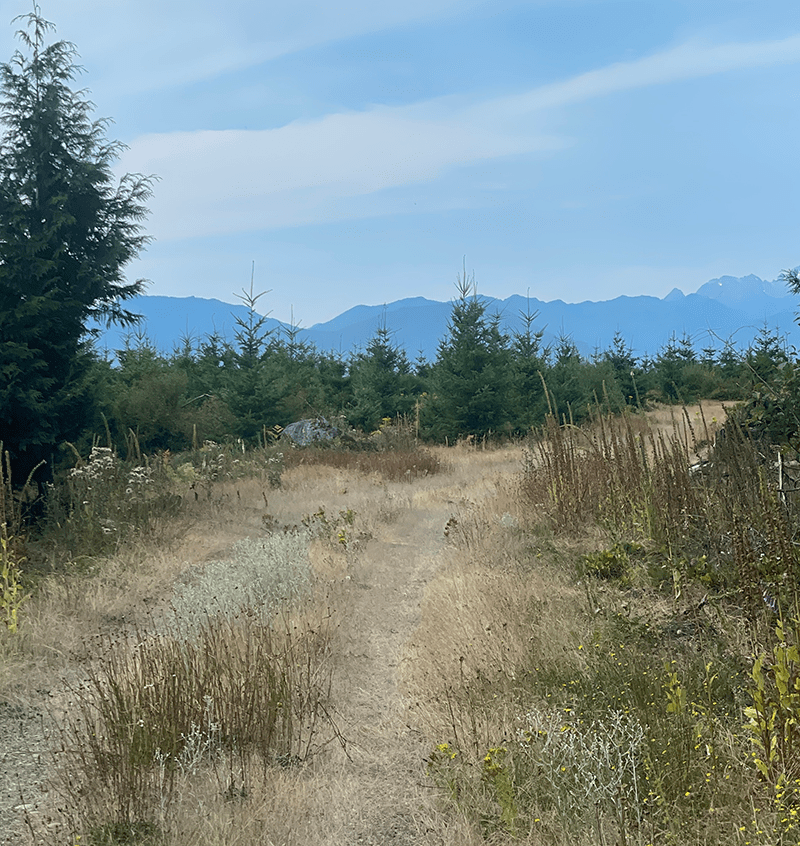
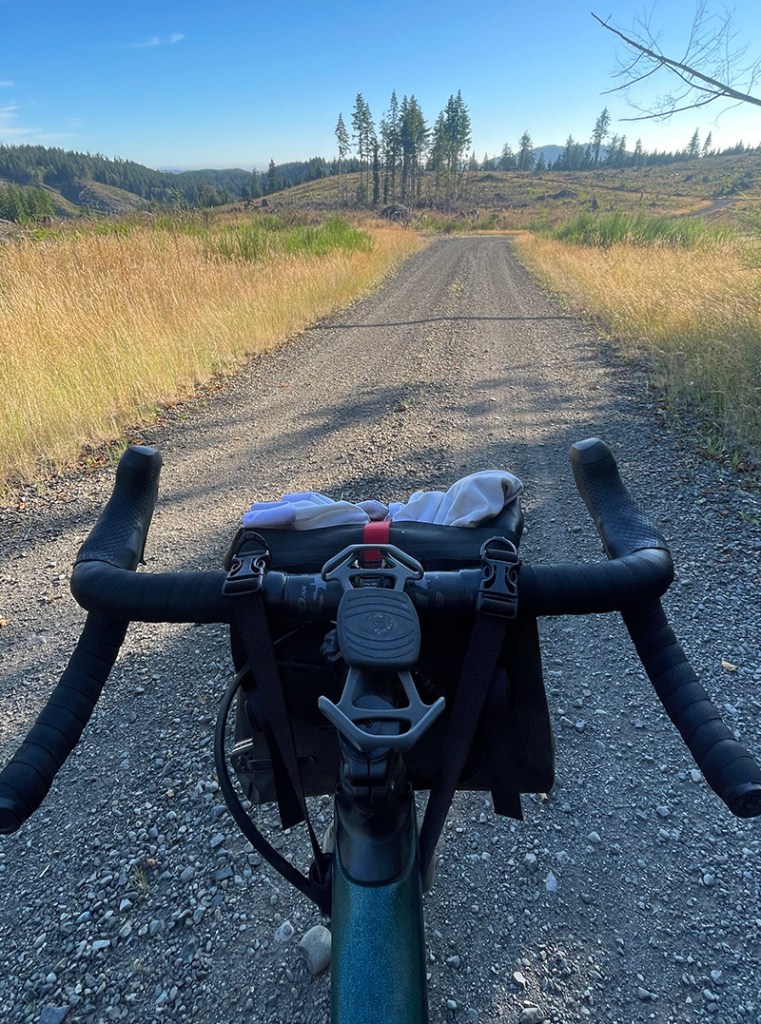
West of Quilcene, I turned onto Penny Creek Road and started climbing. The pavement gave way to gravel and approached the eastern side of the Olympic Mountains. After a few miles, the route turned onto a road which apparently rarely sees car traffic. It was so overgrown that the only way forward was riding through bushes and leaves, barely able to make out the gravel road below. I also discovered that ascending and descending gravel, especially with the bike loaded for a multi-day trip, are two very different things. After cranking uphill you must recover and get focused for the descent. Similar to how a river runner picks a line through a rapid, I found myself “reading” the road, picking the smoothest, safest line possible.

Day 2: An Unforgettable Wildlife Experience

After 99 miles and 10 hours in the saddle day 1, I awoke to the sound of ocean waves and salty air at Dungeness Campground, feeling remarkably fresh. I continued west on the Olympic Discovery Trail, stopped for coffee and a breakfast burrito in Port Angeles, and began ascending the route’s first single track trail towards Lake Crescent.

Stumps Galore Out Here
Single Track Near Lake Crescent

I struggled a bit- a few times the rear bike bags jumped off the rack, which alerted me to the obvious velcro strap to prevent just that. Off the beaten path, exploring an area I had never seen before, this stretch was one of the highlights of the entire route.

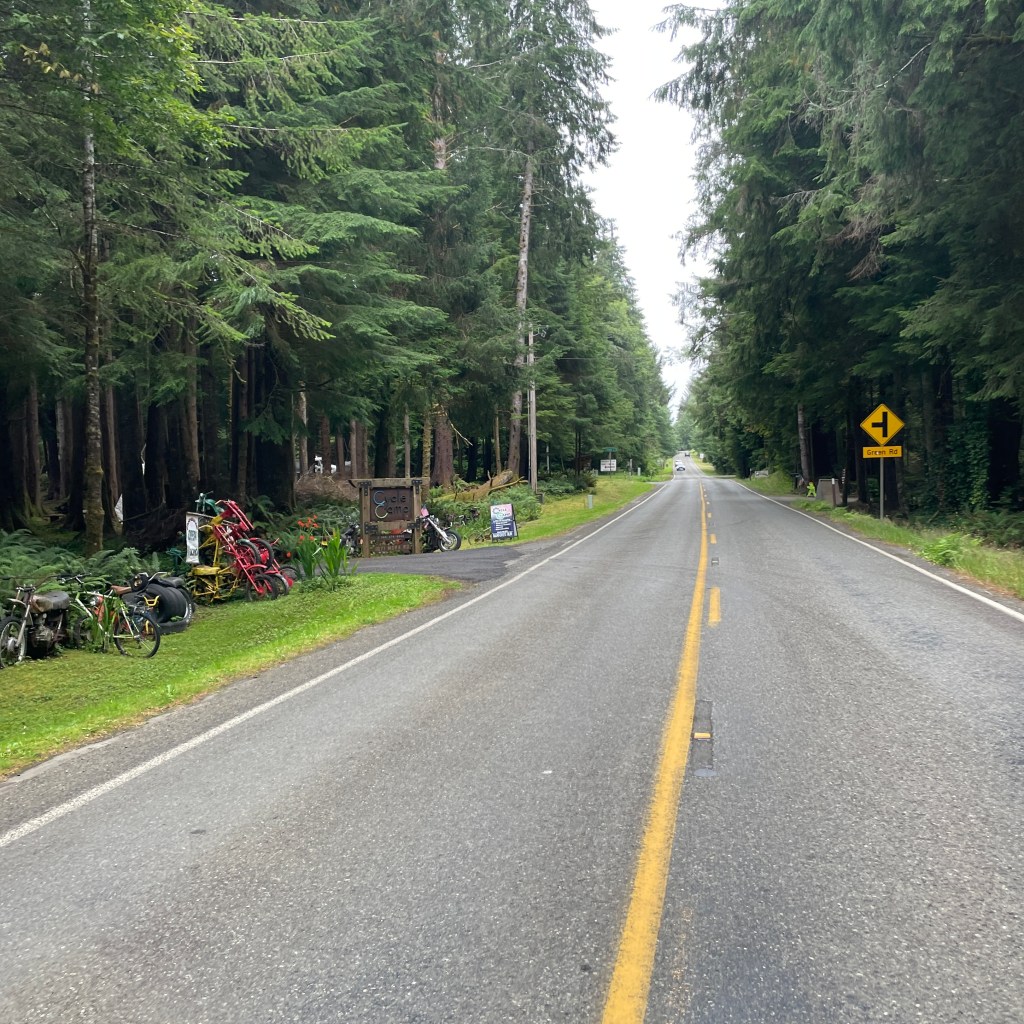
Once I got in the rhythm, the only question was, how far could I go before sunset? Riding at night didn’t sound like much fun. The single track was enjoyable but the elevation gain made for very, very slow going. It was already getting late in the afternoon as I rounded Lake Crescent. I was up against the clock, pushing hard to reach my destination, Cycle Camp. 7 years ago, Bob, a free-spirited hippie opened up his property for the Olympic Peninsula’s two wheel travelers. Both bikes and motorcycles are welcome to camp, shower and even wash clothes, completely based on donations.

Moments Before Running into the Elk Herd
Arriving at Cycle Camp

Besides the spectacular views and mechanically smooth day, the highlight of day 2 was one of the most intimate wildlife experiences I’ve ever had. The sun was low in the sky and I was deep in privately owned logging land when I came up on a herd of elk. About 50 yards ahead I could see 8 or 10 of them, and they could see me. My first instinct was caution. I tried to recall if I had ever heard of elk attacking people, which immediately sounded ridiculous. I spoke out loud to them, as though that might help. A moment later they got spooked and started running the other direction.

Elk Up Ahead on the Gravel Road

Assuming the show was over, I kept moving. The elk had not gone far. As the road steepened, I gained speed while the elk trampled through the forest next to me, creating what sounded like a violent wind storm or earthquake. Branches snapped, the ground churned and about 100 yards later, at the bend in the road, I came to a stop. Just 10 yards ahead, one after another, elk of all shapes and sizes ran across the road. There were easily 40 or 50 in the herd. I had goosebumps. I won’t get too ‘woo woo’ on you but it was as close to a spiritual experience as I’ve had. And to think I nearly opted for the highway to save time… I was buzzing with joy the rest of the evening.

Day 3: How Endurance Sports Separate the Mind and Body

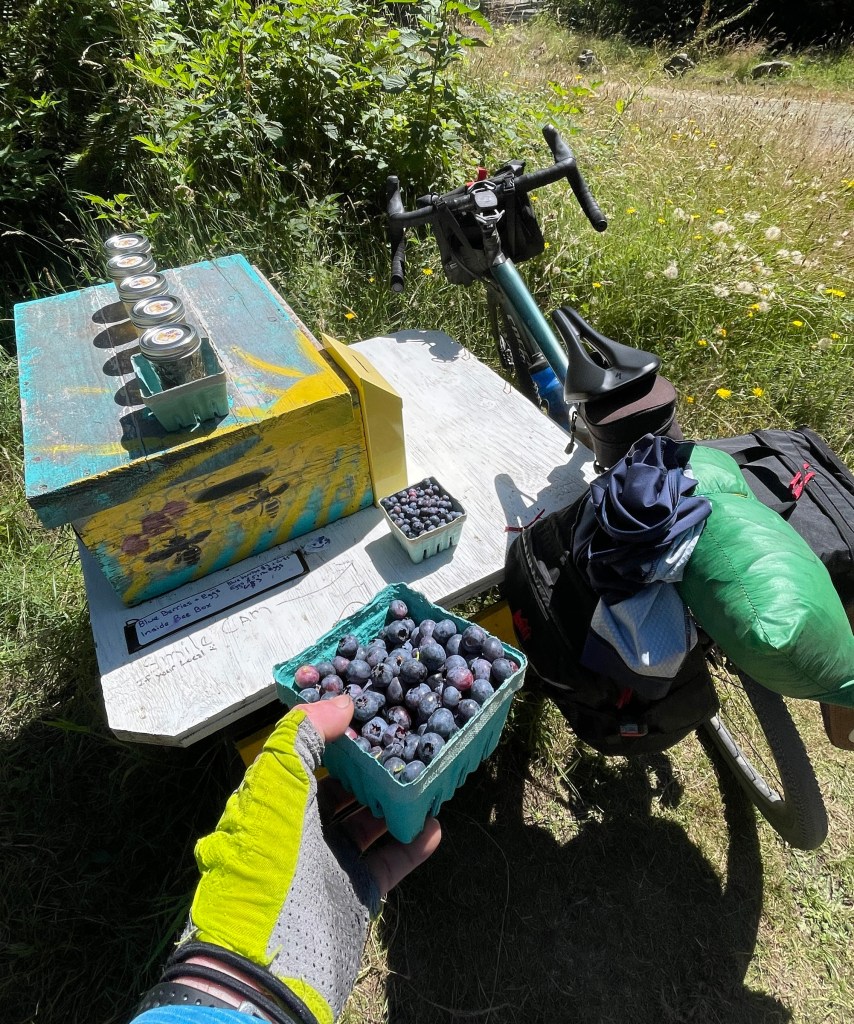
Day 3 started with 20 miles of treacherous gravel. I slogged up the hills and white-knuckled my way down them. By the time I reached Highway 101, I was completely out of food. With no services in the next 75+ miles I decided to take the 101 through Queets. This was the only section where I didn’t follow Miguel through the mountains. I was a bit frustrated with myself for not preparing thoroughly when I noticed a blue and yellow farm stand with fresh blueberries for sale. 2 pints for 5 dollars… I packed one and devoured the other.

A Blessing from the Locals
Overlooking Kalaloch Beach

Riding solo 8-10 hours a day, I had plenty of time to think. Mostly about bitcoin but other things too. It was more than just the stark contrast between a typical “busy” day in the city vs. the simplicity of riding a bike. I was pushing myself mentally and physically harder than I ever had in my life. I had laser eyes. It might sound crazy but my mind and body became two separate entities. Like a player and coach, my mind and body worked together. I rested and re-filled water at streams, made instant coffee and gobbled up carbs all day long. Dusk came, and I made camp somewhere along a forest service road west of Lake Quinalt. 140 miles remained.

More Gravel
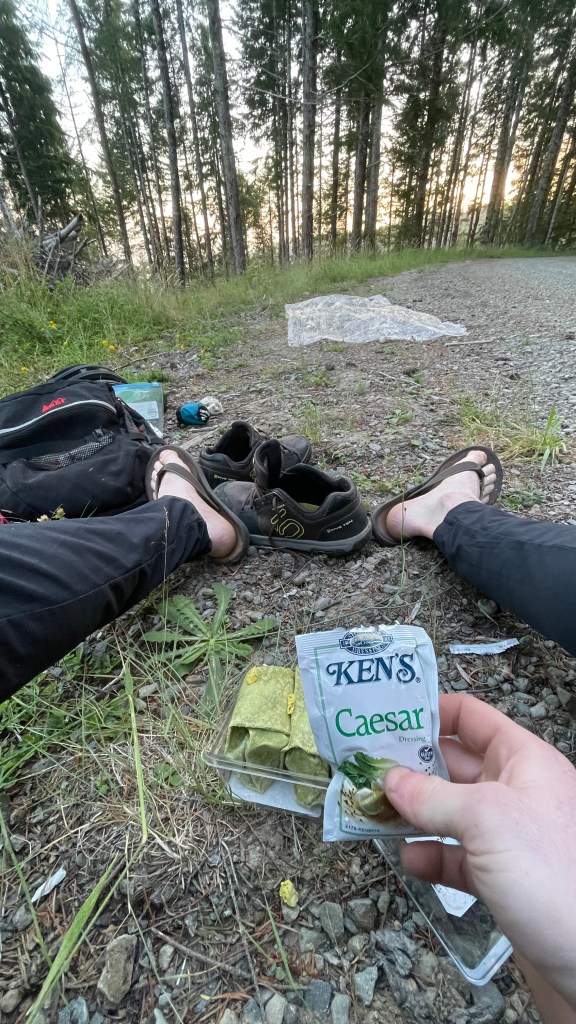
Calories
My View All Day

Day 4: A Nearly Derailed Mission

The two highest points on the route were just ahead to start day 4. That also meant the fastest, steepest descents. My body was sore, but mentally I was ready for another strong push. My bike had other plans. Out of nowhere, the rear (E-Tap) derailleur stopped shifting, stuck in the lowest (hardest) gear. For the next 15 miles I walked the steep uphill sections and coasted downhill, but I wasn’t going to be able to be able to finish the ride without a functional rear derailleur.

Stressed, I stopped at the Quinalt Library to connect to Wi-Fi. After a few internet searches I concluded the bike must have gone into “crash mode.” I figured the gravel descent was so intense the electronic shifting components assumed the bike had crashed. With that problem solved, the stoke was back.

Logging Roads on Day 4

It was beautiful, but damn it was hot. The tradeoff with riding clear-cut logging land is more scenery, but less shade. I passed a logging crew and one of the guys jokingly said, “I didn’t think I was going to have to flag traffic out here!” Pondering the dynamics of the timber industry, I marveled at how just a few men with big machines could impact the landscape so dramatically. I thought about how humans rely on wood, previous generations settling in Washington with the sole purpose of logging, and the fact that the road I was on wouldn’t exist if a private timber company didn’t build it.

The Pain Cave

By evening, I had entered the pain cave. My back and neck were sore, my left wrist was acting up, and my seat bones were swollen… but mainly my knee was killing me. It’s a pain I’m quite familiar with and have been able to manage through eating a clean, animal-based diet and more intentional mobility training. To me, pain triggers fear about more pain, and less of what I love. But pain is part of the game. I spent nearly 11 hours in the saddle day 4 and still came up short of the nearest established campground. I even sang along to some Eminem throwbacks to rile me up during the final climb of the day.

In another situation I would have been worried about where I was going to camp, but by this point, with the laser eyes, I didn’t care. I pitched my tent, looked up and realized I was  directly in front of private property/no trespassing signs. Whoops. I figured, at least my tent is green and matches the bushes. Cars won’t even notice me. I dozed off to the sound of harbor seals and waves crashing on the rocky beach beside me.

Camping Next to Hood Canal

Day 5: A Renewed Appreciation for My Home State

One of the recurring thoughts I had throughout the trip was just how grateful I am to call Washington home. I spent 4 days in awe of places I had driven past dozens of times, but never explored. Fresh air, clean water, fantastic summer weather and virtually limitless possibilities for recreation… what else do you need to call it paradise? A renewed sense of appreciation for Washington was the biggest thing I took home with me, and it didn’t take up any space in my bags.

Washington is so damn beautiful!

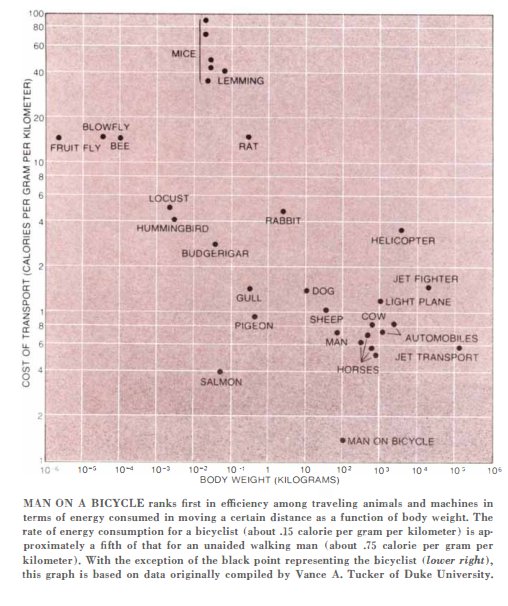
Another major realization I had was just how efficient it is to travel by bike. Not only is it “greener” than driving, it’s also cheaper, since you won’t be paying for gas, campsites, parking and speeding tickets. In 1973, S.S. Wilson wanted to prove that migratory birds were the “masters of efficiency- which turned out not to be the case.” He used data compiled by Vance A. Tucker of Duke University (see chart below) to compare various animals and forms of transportation, with Body Weight (Kilograms) on the X-axis and Cost of Transportation (Calories per Gram per Kilometer) on the Y axis. In fact, a man on a bicycle is more efficient than another animal on earth, as well as cars and planes. There’s a fun fact to share on your next group ride 🙂

The route ends with a proper homecoming, approaching the Seattle waterfront by ferry. Surrounded by summer tourists, I felt a sense of accomplishment. I’ve sent some pretty ridiculous missions in the past, but this one felt different. Nobody knows what I just went through. For all they know I just came across the sound for a cup of coffee. But in fact, I had just completed the hardest endurance mission of my life. 

Returning to Seattle on the Ferry

When I got home I sent a photo with a thank you note to my friend, James, who sold me the bike. He responded by saying, “So cool, you’re going to have tons of amazing adventures! The bike will set you free…” That’s it. The bike will set you free.

Freedom is not a short-term rush like the adrenaline kick from hitting a jump on a mountain bike. The human spirit yearns to be free. Unfortunately, freedom is not the norm. Not today, and not at any point in recorded history. There are more entities trying to limit your freedom and control your attention than ever before. You didn’t ask for my advice, but if something makes you feel free, do more of that thing. Doing what you love is an act of rebellion.

The same reason I fell in love with bikes as a kid is why I love riding today. Aside from giving you a few tips for when you go ride Miguel’s Olympic 360 Scramble, I hope this inspires you to think about what sets you free, and do more of that.

Fix the Money, Fix the World

Thank you,

Kyle ❤

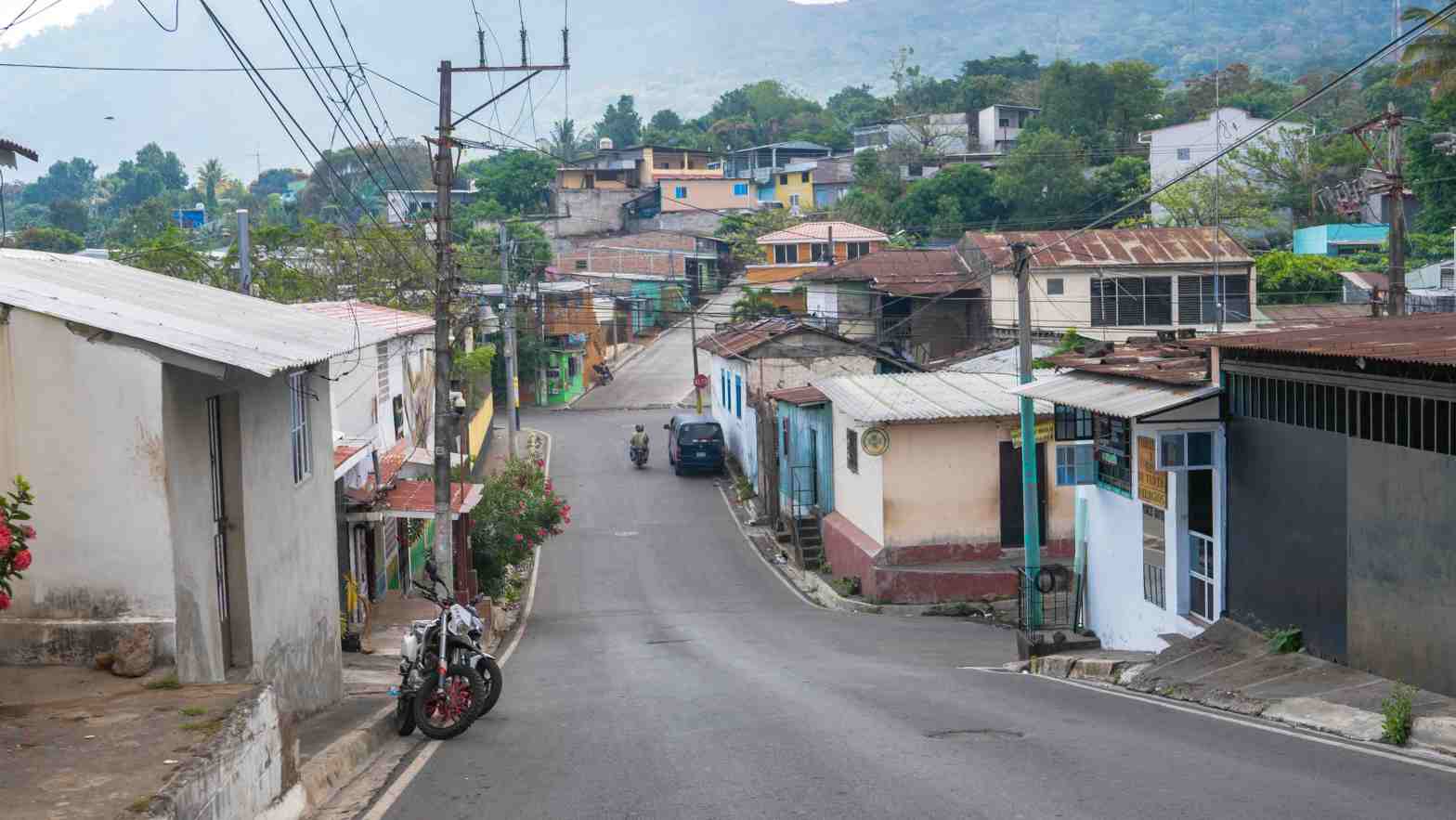
El Salvador’s Fastest Growing Circular Bitcoin Economy: Berlín

8 months ago, two Salvadorians, Gerardo and Evelyn arrived in a small mountain town of 25,000 people, with a vision for how bitcoin could help the local economy.

They started started onboarding local merchants to bitcoin and paying for daily purchases on the lightning network.

At first, the local merchants thought they were being “sold” bitcoin. They politely declined, preferring to accept US dollars.

People called Gerardo and Evelyn crazy and doubted their plan could work.

But Gerardo and Evelyn were persistent. They continued onboarding merchants to bitcoin and opened a center (with the support of My First Bitcoin- Mi Primer Bitcoin) for financial and bitcoin education.

Fast forward to today, the local economy is transforming. 120 merchants now accept bitcoin and for the first time in their lives, the local people are thinking about saving for the future.

To celebrate and show what’s possible with bitcoin circular economies they hosted a mini-conference, Economía Bitcoin. As one speaker put it, when builders, local merchants and bitcoiners from all over the world gather under the same roof, the vision gets bigger.

El Salvador opened the doors to make bitcoin legal tender, but organic Bitcoin adoption happens from the bottom up. If bitcoin is ever going to reach its full potential, it must become a medium of exchange first.

The future looks bright in El Salvador.

Video link here: https://youtu.be/eJVqsgUt8-4?si=Szr4oRc_AsAX4EQV

earthy and the West Coast Tour

This Friday, my partner Brooks Bash and I will be standing at the Canadian border, ready to begin a 1500-mile relay, cycling and running down the west coast.

Our plan is to stop at local gyms, shops and trailheads to share our love for movement and mushrooms.

earthy founders Brooks Bash and Kyle Huber

This is our grassroots launch plan for earthy, but let me rewind to how we got here and why.

Mushrooms’ powerful health benefits have been used in Eastern traditions for thousands of years, and only now are being re-discovered by the rest of the world.

The supplement industry saw this trend jumped in to capture market share.

But with low quality ingredients, hidden artificial sweeteners, toxic contaminants and other microbiome-disruptors, Big Supp* is letting health-conscious consumers down.

earthy is not a typical supplement company. We are the “anti-supplement supplement company”- we recognize supplements are not a health insurance policy, nor a replacement for REAL FOOD.

Everything we do ladders up towards the mission to empower people to own their health journey. Each individual has a unique health journey, but one thing remains the same, nobody is going to maintain your health except you.

You’re responsible for what you put in your body, from the food you eat to the information you consume.

Our first product is called earthy Energy, the ultimate adaptogen energy mix. With intentionally-selected ingredients at effective dose rates, traceable to the farm level, earthy energy is differentiated from anything else on the market today. Grown up hot chocolate designed for sustained, focused energy.

earthy Energy is proof that complete ingredient transparency is possible.

It’s not easy- we called 30 beetroot suppliers and only 3 could tell us where they get their beets. Of those, only 1 would let us share that information with our customers.

So why go to such an extreme to get our message out there?

We had had enough of sitting behind the computer screens and we wanted to prove the power of our products and start building our tribe before we launch.

We will be writing more and sharing updates as we hit the pavement later this week! Go to liveearthy.co and sign up for the email newsletter there.

Come run a mile with us or join us at one of the move and recover events when we come through your city.

Last, I appreciate you for being so supportive over the years. Please reach out if you’d like a sample.

Practicing Failure. Firefighter Connie Guerrero – ACP #71

Connie Guerrero grew up in a small town outside Santa Cruz, California. She was a self-driven kid from the start, creating her own position in the local fire house at the age of 15. Connie tells stories and shares wisdom from her 20+ years fighting fire in California, and other passions along the way.

Her story really inspired me to re-engage the things I’m passionate about. If you’re interested to hear more about what’s been on my mind and topics I’ve been exploring, check out the Symphony Podcast. We release an episode each week on a new topic.

I’d love to hear what you take away from this episode! Comment below 🙂

As you all know, the Adventure Creator Podcast is a passion project, and to this day continues to be something I do simply because I love having conversations with people who are passionate about what they do. Conversations like this remind me of the WHY at the root of the past 71 episodes.

If you’re interested in some of businesses I’ve been working on outside of my job at CreativeLive, check out Saliz.io and AreteAdaptogens.com

I use Root Strength from Arete Adaptogens and the AFA wild-harvested Algae from Saluz every day, and my energy and health has never been better. If you’re interested in experiencing what I’m talking about, you can enter promo code “adventure” at AreteAdaptogens.com or Saluz.io

Here are a few videos I’ve made recently:

I swear it won’t be 6 months until the next blog post! Thanks for being here. – Kyle


The Invisible Front Lines of Mental Health

On March 4th, 2017, my friend Will (Scooty) Taylor died by suicide. There were no warning signs, nothing in hindsight to signal suicide was a possibility. On the surface, Will seemed fine. He was a few weeks away from college graduation, and had his whole life ahead of him. But behind the Will that we all knew as an incredibly positive, energetic and caring person, there were challenges we will never fully understand.

In following the days, weeks and months, Will’s family and friends grieved. I still remember where I was, in my kitchen, when I heard Will had passed. My initial reaction was shock, then confusion. Why? Why did this happen? How did Will feel like that was the only decision left?

Still, these questions remain unanswered.

Losing a loved one, a friend, or a community member to suicide has become a nearly ubiquitous experience in the US. Suicide is the second leading cause of death in the 10-34 age group. In the US alone, a suicide occurs every 11 minutes (source).

Personally, I’ve lost count of how many people I know who have died by suicide. Although each situation is different, if there’s one thing I’ve learned, it’s that there is no reason to judge those who make this decision. It isn’t productive to solving the problem and certainly doesn’t foster open dialogue around mental health.

Inevitably, those affected by suicide face a difficult, yet critical decision: how to proceed. In Will’s case, the conversation around mental health began to yield some conclusions. For one, nearly everyone has dealt with significant psychological challenges. While isolation exacerbates the problems, knowing we aren’t alone in our struggles can be incredibly freeing. Second, in contrast to physical injuries, mental health issues are invisible. Immense pain and suffering can be concealed behind a façade of happiness and positivity. Third, it became obvious that there was a lack of support and resources, especially for young people transitioning to the next chapter of life.

Kasey Taylor, Will’s older sister, and a number of her friends started to ask the question, “So what are we going to do about it?” Their answer was The Scooty Fund. From a rag tag team of 5 to a fully functioning 501(c)3 with more than 30 volunteer members strong, The Scooty Fund has had profound impacts on not only Will’s direct community, but on young people around the nation.

When I was invited to join the board of directors in 2020 I didn’t hesitate in saying yes. To carry the torch forward and be one small part of this movement is an honor, and today I am thrilled to share The Scooty Fund Origin Story video:

If you or anyone you know may be interested in participating in TSF, you can contact me directly, or follow the Instagram page where we put out content almost daily, as well as highlight community members’ experiences through the Wellness Warrior Wednesday program.

There’s more to say, there’s a Will and a way.

Uncertain Things Podcast

Why do we fight for a liberal democracy?

What right does the individual have to parse through information to make their own informed decisions?

How does the two party system limit voter’s choices and people’s freedom?

I got the chance to interview Adaam James Levin and Vanessa M. Quirk of the Uncertain Things podcast about the process of starting a podcast centered around open dialogue and information sharing.

There are seemingly unlimited podcasts out there these days, and Uncertain Things stands out to me because of Adaam and Vanessa’s approach to interviewing, their deep and broad knowledge, and the fantastic guests they host. Check out the Uncertain Things Podcast – podcasts.apple.com/us/podcast/unce…gs/id1529979654

And follow on Substack: uncertain.substack.com/

The Origins of ‘Adventure Creator’

“Every day is an adventure if you want to make it one.” While traveling solo in Europe in 2017, my friend Derek sent me a Jon Krakauer quote that included this phrase and it stuck with me since. Life is best lived with an ever-changing horizon, each day a new opportunity to engage with the beautiful wonders of this world: people, culture, nature, science, philosophy, sports… desire for experience creates an endless supply of passion and curiosity.

From a young age I knew that the carved out, beaten path would not fulfill me. I come from a community of high performing professionals where success looks like a big house and comfortable lifestyle. As I grew up, I noticed that material things and physical comforts didn’t correlate with fulfillment and happiness. This understanding allowed me to redefine what success really is and empowered me to take control of my path.

Identifying as ‘creative’ was a big step. I stopped saying “some day” and started taking action. I was drawn to the power of storytelling and documentary filmmaking after years of ignoring my inherent creativity. My professor (and also filmmaker) Olivier Morel recognized my genuine interest and told me that writing, filmmaking and storytelling are viable career paths. From there, I started freelancing as a photographer and videographer by joining a networking group and working for free on a few larger video and film productions. One thing led to another (I tell this story in ACP episode 50) and I ended up joining CreativeLive as a video and podcast editor. Learning from creators like Nasa Koski and Chase Jarvis leveled me up and continued to fuel to my fire.

I’ve always enjoyed deep conversations because they guide me into the present moment. After all, the present moment is all there is. Besides the pleasure of the conversation itself, I am fascinated by peoples’ stories. From perspectives on world events to stories about life’s highs and lows, there is never a shortage of things to talk about

Now I want to confess something. I used to tell myself stories that held me back. I probably still do, but maybe not as much 😉 I said I would carve my own path but I didn’t put in the work. I made excuses for why I “didn’t have time” or “some day I’ll start something for myself” blah, blah, blah. The first ACP episode with my mentor and friend @joel Johanesson took me 4 months to put out. Joel pestered me again and again until I finally had the courage to publish it. At the time I think 2 people listened to it, and probably shut it off after a few minutes. The blockade in my mind wasn’t warranted. 

Through 49 episodes of ACP and more than 200 episodes as an editor with CreativeLive I’ve developed a mindset that pushes me forward rather than holds me back. I wake up each day with a purpose to keep inspiring, educating, and uplifting myself and my community. I enjoy exercising my creative muscles, I get incredible satisfaction from hearing that a piece of content elevated someone else, and I am going to continue doing ACP for as long as I love the process like I do now.

For episode 50 I join Matthew Collamer on the Mindful Creative Podcast to talk about my path and passions. We discussed a number of chapters in my life and I shared perspectives and stories at length and in full detail unlike the first 49 episodes of ACP. I had a blast talking with Matthew and I am stoked to share a bit about myself to celebrate 50 episodes!

If you’re still reading this, thank you for your support and your positive energy. I wouldn’t be where I am mentally and spiritually without you. Expect to see more ACP, more stories and more love in 2021. I appreciate being part of your journey and sharing this awesome experience together.

Holiday Update 12.25.20

My hard drive failed and I’m currently in Quintana Roo, Mexico, so I am not able to publish two of my recent ACP episodes. Hopefully the data recovery folks can help me out but I am not optimistic. It’s likely I lost almost all the footage from three months in Mexico and a handful of Symphony Podcasts… Brutal, but things could be worse.

My mom always says, “bad things happen so worse things don’t happen.” I don’t see how that applies to this situation but at this point it’s out of my control and not worth fretting about. Three years ago I had just been traveling around Europe for three months and had my backpack stolen with my camera, laptop, drone and worst of all my external hard drive. I think the sting of that one allowed me to compartmentalize this situation and remain in the present moment and have a positive mind state.

Here’s a photo of me three years ago in the Barcelona Police station after crying my eyes out.

Barcelona, 2017

Unable to publish anything this week I wanted to share a brief podcast update so I walked outside from the Airbnb and recorded for 9 minutes- 1 take, just my raw thoughts on this Christmas day, 2020.

SoundCloud link

Two main messages came to mind:

  1. What gifts did you give yourself this year? Gratitude breeds happiness and reflecting on the positives from 2020 is key to being in the right state of mind as the year comes to an end.
  2. What are you working on? Even if you are content with your place in life or your mindset, there is always something to learn, or some way to grow. After attending a men’s retreat a few weeks ago I discovered a possible area of growth I had been ignoring- learning to be present even when I feel like I’m wasting time or I’m doing something I’m not all that thrilled about.

Thank YOU for being a part of my community and providing the fuel I need to keep creating. I appreciate everyone who has been a part of my journey and especially the folks who reach out to engage with the content I put out. It means the world to me to hear from you.

Video here: Adventure Creator Podcast Holiday Update

Anyways, cheers to 2020 and Merry Christmas 🙂