Finding Fulfillment: A Take on Mental Health

In the US prior to 1970, exercise was a foreign concept to most. If someone was running down the street your first instinct would be, “from what”? Today, in 2018, gyms and fitness are part of daily life. It is universally understood that physical activity is key to maintaining physical health.

Mental health, however, doesn’t get the same level of attention. Although people are becoming increasingly aware their importance, mental health issues are usually treated once they arise, using blanket diagnoses such as depression, PTSD, bi-polar, etc. to identify the proper medication to treat the symptoms. The issue is multi-dimensional; from the Big Pharma influence, to doctors’ incentives, industry constraints such as limited time to assess patients, insurance companies willingness to pay for pharmaceutical medication but not psychological assessments and counseling, and more, mental health problems are handled ineffectively in the United States.

“Depression is a chemical imbalance in the brain.” We’ve all heard this one before. The issue, however, is that this statement oversimplifies the issue and ignores important factors at play. According to scientists from Harvard, “depression doesn’t spring from simply having too much or too little of certain brain chemicals. Rather, there are many possible causes of depression, including faulty mood regulation by the brain, genetic vulnerability, stressful life events, medications, and medical problems” Source. Writing off the issue as a simple “chemical imbalance” is a disservice to patients who are fighting mental health issues.

Interestingly, the average age of onset for many mental health conditions is the typical college age range of 18 to 24 years old, said Courtney Knowles, executive director of The JED Foundation, a charitable organization that aims to reduce suicide and improve mental health for college students. In fact, according to the National Institute of Mental Health, 75 percent of all individuals with an anxiety disorder will experience symptoms before age 22, as cited in the ADAA Report. This information should inform doctors, parents, and friends of people dealing with mental health challenges during these years: take action now before the issue manifests into more serious problems down the road.

People have physical needs: shelter, food, water, sleep, and security. Without one of these things, (see Maslow’s Hierarchy or needs) problems arise; hunger, hypothermia, exhaustion, dehydration, or physical danger can prevent a person from living effectively. The same goes for psychological needs; people require emotional support, decision-making autonomy, and a sense of purpose in the same way they need food and water. Picture two people side by side: one has been battling insomnia and an ongoing food disorder, while the other simply feels like their life has no purpose. How different do they look? How different do they feel? How often do their symptoms overlap?

The Gut Brain Connection

Did you know that the bacteria in your stomach impacts your brain chemistry and vice versa? Think “gut-wrenching experience” or a “gut feeling”: the gut microbiota impacts how we think and act. In 2011, scientists conducted an experiment which compared the behavior of mice which consumed a probiotic, and mice which did not. They found that the mice which consumed the probiotic acted more calmly. “The probiotic bacteria, Lactobacillus rhamnosus, contains a neurotransmitter called GABA that helps regulate brain activity and can calm anxiety. Based on the reactions of the mice that consumed L. rhamnosus, researchers concluded the bacteria were affecting their brain chemistry. “Those pesky little critters might be the master puppeteers of our brain,” Dr. Cryan said of microbes (not mice!) during his 2014 TEDMED talk. This topic deserves a deeper dive, but for now, I’ll just mention it in relation to the mental health discussion today.

John Mackey, founder and CEO of Whole Foods, uses the analogy of a person’s happiness and a business’s profits in his book, Conscious Capitalism (highly recommended read). A person seeks happiness like a business seeks profit. If a company wants to be profitable they should focus their efforts on the business operations and processes that result in profit. Quality customer service, a great user experience, significant added value to the customer, among other techniques, result in increased revenue. Successful companies do not say, “Let’s focus on profit this quarter.” Instead, they focus on business processes and strategies that drive profit indirectly.

A person should seek happiness the same way a business seeks profit. If someone is feeling down, would you recommend that they go “be happy?” Of course not. Rather, you might recommend they find a new passion, new friends, or try to do things that indirectly make them happy. Taking a pill that simply dulls the pain and disconnects the patient from his or her worries, ignores the root cause of the problem. While you might be happy and content today, life can throw a curveball anytime. If you were setting sail on a long ocean voyage would you patch up a leak with duct tape and rubber bands? Whether you are mentally and emotionally prepared determines if you will weather the storm or let it consume you.

My thesis for the day: Everyone needs a sense of purpose in life. Eating well, surrounding yourself with positive and supportive people, and doing things that make you happy are all fine and well, but a fundamental sense of purpose will help you overcome life’s challenges and enable you to succeed. People find purpose in different ways: some folks climb mountains, run marathons, strive for high marks, or win competitions. Other’s learn a new instrument or language. Helping other people is inherently rewarding. Mental health requires effort and attention just like physical health. Don’t wait until you are stressed out and emotionally drained to do something about it. Meditate, move, socialize, volunteer, do something creative, or just shake things up. Maybe a road trip or weekend hike now and then is all you need to stay balanced. Take control of your mental health.

If you made it this far, thanks for reading. Today’s topic is something I’m passionate about not necessarily the most groundbreaking ideas… but the comments section below is meant to be used, so go ahead and add your thoughts!

Read more of my blog here.

A few statistics from: https://www.nami.org/Learn-More/Mental-Health-By-the-Numbers


Podcast: Kevin Esherick and Derek Newhof on Meditation

Kevin Esherick, Philosophy and Psychology major, joins from Washington D.C. to discuss his nuanced understanding of meditation, passion for mental health, and his new mindfulness app. 15 minutes before the call I messaged Derek (see previous episode) and turned it into a three way.

Here are a few links and references from the conversation:

Article: 26 Super-human Benefits of Meditation


The Book Kevin Mentioned: The Mind Illuminated

Technology, Aristotle, and Habit

As technology becomes omnipotent in daily life, its role in forming habits is a growing priority. Although tech provides myriad benefits, the drawbacks are now surfacing in scientific studies. At a physical level, exposing the human eye to powerful LED screens, especially late at night, induces lack of sleep, headaches, and anxiety(The Dark Side of Blue Light). Personally, minimizing screen time seems to allow me to fall asleep faster and have more vivid dreams. From a musculoskeletal perspective, prolonged hours working at a computer desk causes tension to build up in the spine and reduces blood flow(Why sitting is bad for you – Murat Dalkilinç).

A sedentary lifestyle is linked to a range of health problems (Do You Have Sitting Disease?. There are ways to mitigate these issues (stretching/yoga, wearing computer glasses, exercising and healthy eating), but what ultimately drives a person’s actions is the power of habit.

The following is an attempt to relate Aristotle’s philosophy of habit and desire to today’s cutting edge research and behavioral studies.

Aristotle’s Moral Exemplar Argument

  1. Intentional actions will be accompanied by some measure of either pleasure or pain (or some kind of mixture of the two)
  2. An action is morally excellent if and only if it is done as a moral exemplar (i.e. someone with complete moral excellence) would have done it
  3. A moral exemplar will feel complete pleasure at all virtuous actions, and avoid all vicious actions (because they would cause her pain)
  • Therefore a person who experiences pain when acting virtuously is not morally excellent, even if the actions themselves are done in accordance with virtue.

Let’s apply Aristotle’s logic around seeking moral excellence to seeking professional or personal excellence in today’s society: substitute “technology master” (someone who uses technology optimally) in for moral exemplar, and Aristotle’s logic holds true. A true “technology master” experiences pleasure at beneficial actions and pain from actions that hinder their achievements.

Electronic collaboration is nearly universal in the professional world. If the goal is to leverage technology’s benefits while avoiding the negative side effects, then managing tech use is as important as good nutrition. A person aspiring to be successful should establish the necessary traits; focus, productivity, and hard-work are inherently opposed by distracting technology and the constant buzz of notifications. In order to do so, however, means controlling technology use.

When it comes to using technology, Aristotle would highlight the importance of building habits from a young age. People pleasured by technology are at a disadvantage compared to those who prefer using their smartphones sparingly. Kids become “addicted” to using devices similarly to how a nicotine user gets addicted to smoking, except instead of inhaling carcinogens, the addiction comes through continuous dopamine release.

The most consuming technologies trigger reward systems in the brain: think, Facebook “likes”, Snapchat “streaks”, Twitter “re-tweets,” and the little red bubbles displaying app notifications. Companies are leveraging human psychology and visual cues when designing apps, logos, and websites. Light blues are often relaxed and calming. Bright blues can be energizing and refreshing. Dark blues, like navy, show strength and reliability(Source).

app blue lgogos.PNG

As a consumer, navigating the world of technology is complicated; mobile phones, computers, and other devices, which were originally adopted due to convenience and efficiency, have become culprits in forming consumers’ self-destructive habits.

A few statistics:

  • 29% of people start their day looking at their smartphone
  • 37% are checking it every 30 minutes or less
  • 68% leave it next to their bed at night
  • 61% use their phone while watching TV

Relevant link- *Is Watching Too Much TV Making You Depressed? Studies Say It Can

Alice Walton, contributor at Forbes Magazine writes,

The irony of Facebook is by now known to most. The “social” network has been linked to a surprising number of undesirable mental health consequences: Depression, low self-esteem, and bitter jealousy among them.” In the study, people who logged more Facebook time had more depressive symptoms, largely associated with “social comparison.”

Observing peers’ achievements and highlights on a day to day basis erodes self-confidence in some people.

Does this mean everyone should delete their Facebook accounts? Surely, not. But it does mean that addressing mental problems, raising children, and maintaining good health just got a little easier. The solution is to establish habits that make using technology less attractive, less pleasurable, and more “painful” in Aristotle’s terms. Charles Duhigg’s book, the Power of Habit, contains an exhilarating argument: The key to exercising regularly, losing weight, raising exceptional children, becoming more productive, building revolutionary companies and social movements, and achieving success is understanding how habits work. Duhigg’s arguments make sense: consider the process of forming a new habit. The first few repetitions require significant effort. The second, third, and so on become easier. After a while, something that was once a struggle(like weight-lifting, running, or even writing) can be pleasurable.

I asked Google, “How long does it take to form a habit?” and this is what I got:

habit

Maxwell Maltz was a plastic surgeon in the 1950s when he began noticing a strange pattern among his patients. When Dr. Maltz would perform an operation — like a nose job, for example — he found that it would take the patient about 21 days to get used to seeing their new face. Similarly, when a patient had an arm or a leg amputated, Maltz noticed that the patient would sense a phantom limb for about 21 days before adjusting to the new situation.

Some habits form in as quickly as a few weeks, while others take longer. Positive habits allow for a higher quality of life. Sitting with good posture, using polite manners, and eating a healthy diet are not supposed to be painful! Re-training desires to align with your professional and personal goals will make life a whole lot better. Although it might take some time.

The Conscientious Consumer

The following is a debate over the question: What moral obligation does the First world have to the third world? To give context to the question read on, and explore the SlaveryFootprint.org resource here.


Let’s begin with Peter Singer’s 1972 Famine Relief Argument. It is important to note that Singer writes in the early 1970s:

1. Lack of food & shelter & medicine is bad.

2. If it is in our power to prevent something bad from happening, without thereby sacrificing anything of comparable moral importance, we ought, morally, to do it.

For example, getting wet in order to save a drowning child.

3. It is in our power to prevent this bad thing.

4. We can prevent it without sacrificing anything of comparable moral importance.

Conclusion: Therefore, we ought to prevent the lack of food & shelter.

5. The only way to prevent lack of food & shelter without sacrificing anything of comparable moral importance is to give maximally (or at least very much more than we currently do).

CONCLUSION: Therefore, we ought to give maximally (or at least very much more than we currently do).

According to Singer, there is no moral difference between a child suffering or dying right in front of you and on the other side of the world. The only differences are psychological in nature. Therefore, society should expect people to give charitable donations to those in need. If you are able to help ease the suffering of another person without sacrificing something comparable, you should. Singer claims that if everyone gave about $5 or whatever is equivalent, we would be able to swiftly respond to major disasters like in Houston, Texas last year.


What sorts of sacrifices are really obligatory? From a moral standpoint, what is my duty as a citizen of the world?


One powerful resource that might have something to say here is SlaveryFootprint.org. The group educates people about the impact their lifestyle choices have on people on the other side of the world. The survey attributes an estimated number of slaves that exist and work directly because of the respondent’s lifestyle by assessing 11 lifestyle factors. When I took the survey my answer was 30…


2

Initially, I was skeptical about the survey; I had never thought about the possibility that my actions and lifestyle directly lead to human trafficking and modern day slavery. Regardless of the survey’s accuracy, the rhetorical message behind it holds true: be aware of how your decisions impact the rest of the world. Consumerism drives the demand for cheap labor(post to come on human trafficking). Take a look at Eritrea, Nigeria, and other dictatorships worldwide: economic strife is one of the major reasons human rights issues arise.


Assessing today’s global economic climate, let me pose a question. What are today’s citizens’ moral obligations to give? Singer would say that it is obligatory depending on your own economic standing: even if you can’t give a lot, give something.


To conclude, I hope sharing Singer’s arguments in conjunction with the Slavery Footprint Survey begins a conversation about the connections between economies of the world. Economies don’t act autonomously. There are kids working in factories 14 hours a day so that you and I can go to Walmart and buy a 3-pack of jeans for $28.99. Simply understanding the impact of your purchases and lifestyle can make a difference.

The Single Easiest Way to Improve Your Health

POLL: Improving your health requires more time, effort, money, etc. than you currently have in supply.

If you answered ‘Yes’, this blog is for you.

Did you know? Today’s kids are the first generation expected to live shorter lifespans than their parents.

Maybe you don’t know how to eat healthy, or think healthy food is too expensive. Maybe you don’t need to lose weight- so why bother changing your habits? It’s also possible that you perceive healthy foods as being less tasty(in this case you just need to learn how to cook). Regardless of your specific reasoning, this blog outlines the single easiest way to improve your health.

What options do you have? Sleep, exercise, meditation, nutrition, prescription meds… These either require effort on your behalf or come with potential side effects. In order to sleep more you try limiting pre-bedtime screen use or taking supplemental melatonin. To improve your fitness level, you hire a personal trainer, plan workouts, and research optimal exercise techniques. To change your diet? Well that’s a whole ordeal by itself.

Drum roll please…

The easiest way to improve your health is: CUT OUT refined sugars and carbs. You don’t need to change anything else about your diet; keep ordering the double-bacon cheeseburger, add that sour cream to your burrito, and drink your heavy, calorie-dense IPA. To see results, YOU DO NOT NEED to undergo any major lifestyle or dietary changes.

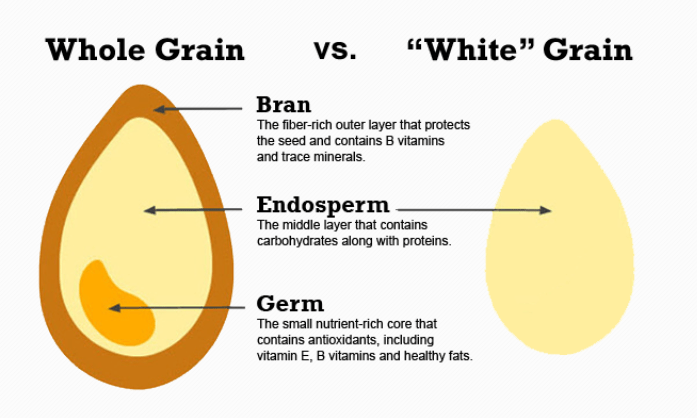
What is a refined carbohydrate? How is it different than a carbohydrate?

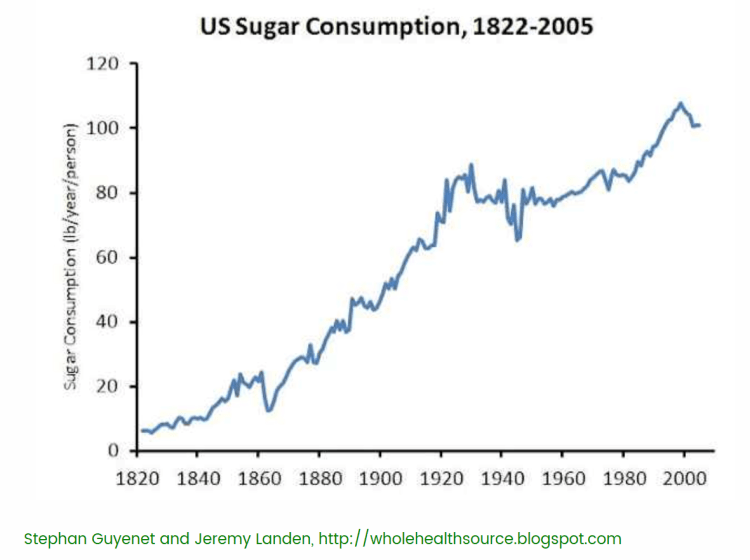
grain refined carb snip.PNGIn the simplest terms, “refined” means “processed.” Over the last century, refined carbs have become commonplace in the US; lacking essential fiber, nutrients, and vitamins, studies correlate consumption of refined carbs with the increasing rates of Type II diabetes(https://bodynutrition.org/refined-carbs/-) and a host of other health problems.

Citing the American Journal of Clinical Nutrition, “Increasing intakes of refined carbohydrate (corn syrup) concomitant with decreasing intakes of fiber paralleled the upward trend in the prevalence of type 2 diabetes observed in the United States during the 20th century” (<Source>). Consuming refined carbs leads to insulin and blood sugar spikes, which causes your hunger to return within a few hours.

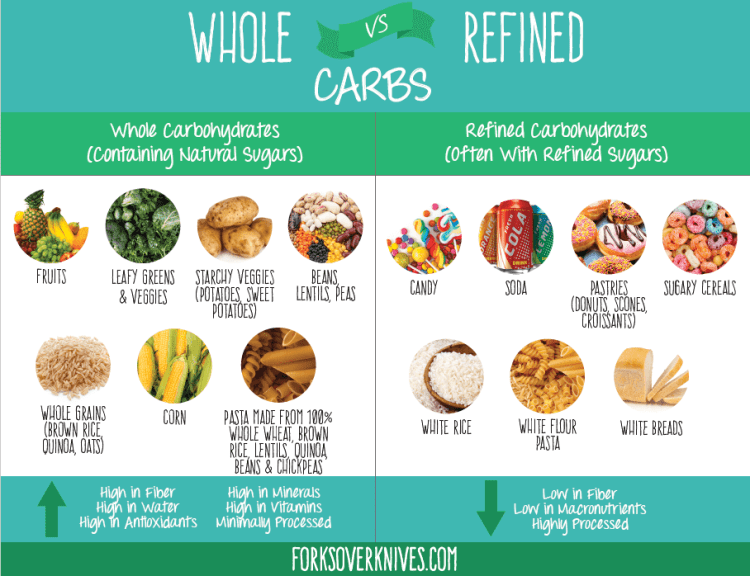
What sorts of foods contain refined carbs?

whole-vs-refined-carbs-graphic.png

Let’s take a look at some culprits in the traditional American diet. While it may be obvious that candy bars, soda, and Pringles contain refined carbs, lesser known refined-carb foods include white flour pasta, bread, and rice. It does not need to be complicated. As Chris Kresser suggests, “Eat Real Food.” My advice: try removing these foods from your diet for a few weeks. What do you have to lose?

sugar consumption.png

Use Tupperware. Save your leftovers. Cook in larger quantities.

What effects should you expect from cutting out refined carbs?

“Within a few days, you should start sleeping better, have more stable energy levels throughout the day and experience improvements in your immune system” (Source).

Cutting refined carbs out of your diet will boost your quality of life and prevent chronic disease. In the US, 1 in 2 people have a chronic disease and 7 in 10 people die from one. Start by implementing the single easiest way to improve your health. It requires little effort, and the worst side effect you will experience is sugar craving… which is not going to kill you!

Can you think of an easier way to improve your health? Share it below!

Thanks for reading. Short and to the point today. I needed a break from researching the migration issue so I decided to approach a topic I’ve been very interested in recently.

I’ve been busy with class, starting a podcast, and developing a business plan for a start-up idea. Although blogging is a lower priority, I enjoy it, so don’t worry, more content is on the way. If you have any ideas or topics you’d like me to discuss drop a comment below!


A few of the resources I used for this blog:

Joe Rogan and Chris Kresser interview Nov. 8th, 2017. Here

American Journal of Clinical Nutrition Here

Source for diagram: Types of Refined Foods

Effects of Cutting Sugar

Chris Kresser’s New Book: Unconventional Medicine

What I Learned in Europe

Some cultures greet by a series of cheek kisses, while others prefer to shake hands.

Eye contact is more common in some countries than others.

Europeans eat differently than I am accustomed to.

Italians don’t order take-out. Asking for coffee to go is the clear sign of an American.

In the US it’s common to say hello to strangers, in the UK it’s a sign of a crazy person.

Businesses shut down for “siestas” in Italy, Spain, and elsewhere. Germany and Switzerland close most shops every Sunday.

The meaning of words, gestures, and mannerisms change between cultures and languages.

Commonly accepted generalizations:

  • The Swedes are more reserved than the Croats.
  • Poles know how to handle their liquor.
  • Italians are fashionable.
  • French make good cheese.
  • Norwegians ski.

While these generalizations are relatively basic and superficial, they all link to the core of society and relate to the value systems in each country. What people choose to do with their time, efforts, and money sheds light on their values.

Inside the hostel kitchen, chatting about culture, people and language is common. I don’t think it’s possible to fully grasp the culture in a given region, city, or even household in a matter of days or weeks. You also can’t go everywhere; often the best way to learn about different cultures is through conversation with people from places you don’t know about. I visited 15 countries in 85 days, and probably spoke with hundreds of people from all over the world. Many folks had vastly different life experiences, ideas, and knowledge than me. I met people from all corners of the Globe: Canada, Argentina, Brazil, Russia, China, Singapore, Australia, India, South Africa, Trinidad and Tobago, Czechia, Iraq, Sudan, Eritrea, Norway, and many more. In a one-on-one conversation, a shared topic like travel makes for an easy opportunity to learn about other peoples’ backgrounds. The non-judgmental atmosphere in a hostel and the mutual agreement about the value in traveling primes folks for honest conversation.

Now, let me share some more notable observations:

French people really prefer if English-speaking tourists ask “Parles-tu Anglais” (Do you speak English?) before the conversation begins. In other places people enjoy the opportunity to practice their English, so you won’t need to start the conversation- if you look American you will often just be spoken to in English.

The pace of life in the Greek Islands is much slower than the bustling cosmopolitan cities like Rome, Paris, Berlin, and Madrid.

More generally,  Europe’s acute size and expansive diversity is a truly unique dynamic. Totally different cultures and unrecognizably different landscapes exist just hours apart. You also don’t need a car to get there- take a train or bus thanks to the prolific public transit in Europe. Traveling a few hours by car or train, you will find yourself in a completely new culture; different languages, food, customs and formalities. Further, if you make it out of the major cities, and the touristic areas, you will find that English becomes less and less common.

Another observation I made along the trip was that no matter what culture you find yourself discovering, facial expressions are universal. An Aussie traveler I met in Portugal said, “the best language to use is a smile.” Referencing his experiences in Bangladesh, India, Myanmar, where English is less common than in Europe, he said the trick came in handy quite often. If you approach someone with a smile you immediately display good intentions. Without even knowing the same language, you might be received more pleasantly. The help you need is just a smile away.

Navigating countries that don’t speak your native tongue can be a real challenge, and often persuades folks to choose another travel destination. However, if you want to learn about other cultures, places like these are more valuable. It is convenient to look down on foreign customs and traditions, deeming people unintelligent or outdated. But the fact that all cultures can understand basic intentions and the simplicity of a smile is evidence to the contrary. After all we descended from the same people, millions of years ago. Although we have progressed as different rates, taken on different traditions and customs, we all share the same biological makeup.

Two final thoughts:

I’ve learned to keep my mouth shut a bit. Rather than begin an interaction blurting out English that might be complete gibberish to the recipient, I begin by either asking do you speak English, or by saying thank you or hello, two basic phrases, in the native language in the area. It’s a simple gesture-my hope is to display respect and acceptance.

When people ask me what my favorite place along my trip was, or the best country I visited, I share two basic comments before trying to answer. This single questions is by far the most common first question you get when returning from an extended journey.

  1. The people I met played a crucial role in my experience. There is a HUGE difference between staying at a hostel with positive, welcoming people and being the only person in the entire hostel.
  2. Time of year(weather) makes a big difference. There is a reason why Spain and Portugal in December are so attractive. During the last week in November I was stuck in a snow storm in Sweden. A week later I was wearing sunscreen in Southern Spain.

Lisbon was magical. Hamburg was a blast. Rome was impressive. Copenhagen was flat. Budapest was spectacular. France was smelly. Vienna was grand. Poland was gritty. Amsterdam was… amazing. I can’t tell you which one was my favorite because I had such a great time everywhere. Several times, when I was tired I got lucky with a relatively empty hostel dorm to myself. When I was a bit more sociable, I happened to land in really vibrant, active spots. In hindsight, I would say finding the ideal hostel or accommodation was the single most impactful decision driving the direction the trip went. Hostels also want to make sure you have the best experience possible because it reflects on them. So when you ask for which restaurants, bars, shows, or parks to go see you are getting quality information.

Returning to the States with new experiences will help determine my next steps. Traveling is empowering and confidence-building. I feel more ready for the challenges ahead and more able to relate to foreign people.

“If three months abroad doesn’t shake your worldviews to the core you must not have had your eyes open”

FYI, I will continue writing about my trip- potentially writing a few of the highlights out in narrative blog format… For now, I hope you enjoyed my thoughts and maybe had something to share from your own experience. If so, please comment below!


Error
This video doesn’t exist

What is the difference between right and wrong?

Prompt: We all agree that murdering people is morally wrong under usual circumstances (i.e. not self-defense, not wartime killing, etc). But one central question in ethics is “why” – what makes it wrong?

The shortest, most concise way I can put it:

*(Assuming GOOD and BAD exist in the world)

1. Causing BAD outcomes is WRONG
2. A persons death is a BAD outcome
3. Causing a person’s death is WRONG

Actions that cause poor outcomes are wrong. A person’s death, is a bad outcome. Therefore, causing a person’s death is wrong. I discovered this logic on my own, but I am sure a Google search would reveal I wasn’t the first to come up with something like that.

A few counterpoints and a brief discussion follow:

One possible counterpoint could be: the death of a person is not inherently bad. If you look at the statement, “death is bad” you might find some examples of when a death actually ends up benefitting the involved parties, individuals, or the world as a whole. For example, the death (or demise) of a morally bad person who has caused or will cause harm to others, isn’t the same as the death of an innocent bystander. Nobody mourned Hitler’s death in WWII, and Americans didn’t lose a night of sleep over the assassination of Osama Bin Laden in 2011.

While the previous counterpoint distorts the clarity of the argument that death is universally a bad outcome, it highlights the fact that the answer is not so straightforward. What does it take to determine a death is justified due to the actions of the person who has been killed?

Another added wrinkle to the problem, perception and truth. Who really deserves to die and who determines what is right and wrong on the plane of international diplomacy? More recently, laws regarding drugs, marriage, the internet, and other fields have approached uncharted territory: technology has surpassed the law and we are now playing catch up.

One other thought:

From any input, whether it be accidental, intentional, human-caused or completely by chance, death is a bad outcome. If the bad outcome is accidental, by the chance of nature, then nobody impacted negatively can seek remedy. But, when another human is at fault the individuals impacted negatively have a way to seek a remedy. Does the proliferation if the litigious US legal system coincide with the physical constraint to assign fault?

Unanswered Questions:
Is anything that impacts other people negatively wrong? What about when a whole lot of people are impacted by an action in different ways (i.e. legislation, court rulings, business, science)? If right and wrong cannot be determined then how can ethical scenarios be classified as right or wrong?